Visualizzazione post con etichetta premio nobel. Mostra tutti i post

giovedì 26 marzo 2026

Sconosciute di Patrick Modiano - recensione letteraria / Des inconnues by Patrick Modiano - book review


Il libro che recensirò oggi è il romanzo Sconosciute dello scrittore e sceneggiatore francese, premiato nel 2014 con il Premio Nobel per la letteratura, un riconoscimento importante per la sua “arte della memoria con la quale ha evocato i destini umani più inesplicabili e scoperto il mondo della vita nel tempo dell'occupazione”, Patrick Modiano. Modiano nacque nel 1945 da un padre francese di origini ebraico – italiane, con dei trascorsi loschi che lo aiutarono a sopravvivere durante la seconda guerra mondiale, e una madre belga. La figura del padre ha fortemente influito la sua opera in quanto in diverse creazioni, tra queste anche nel libro Sconosciute, inserisce personaggi di discendenza italiana o ebrea che si macchiano di atti disdicevoli e intenzioni riprovevoli. Visto che siamo arrivati a nominare il nostro libro e visto che ho già precisato aspetti importanti che riguardano i personaggi maschili, devo precisare però che i personaggi principali di questo romanzo sono 3 giovane ragazze, ognuna la protagonista di una vicenda traumatica e triste. Nonostante fossero accompagnate da amici, famigliari e conoscenze, queste tre ragazze affrontano da sole le situazioni con cui si confrontano e ne subiscono anche le conseguenze sempre in solitudine.

La prima ragazza si trova immischiata in una situazione piena di ambiguità, conosce diplomati, mafiosi, criminali e s’innamora di un ragazzo il cui vero nome non lo conosce realmente ma che la condiziona nelle scelte che farà in futuro. La seconda ragazza dopo essere vissuta in un internato e un convitto di suore, decide di scapare e vivere la vita lontana dalla monotonia e le regole rigide ma questa decisione la porta ad affrontare situazioni di violenza sessuale e stupro. La terza storia, anche se in apparenza è la più inoffensiva, se non si è un’attivista dei diritti degli animali, nonostante sembrasse inconclusa o almeno più delle altre, in realtà cella diversi traumi che questa ragazza subisce e che si porterà con sé per tutta la vita. Quello che accomuna le tre ragazze è l’età molto giovane e l’aspetto attraente che concorrerà alla causalità di tutti gli eventi che dovranno subire. Non hanno delle doti particolari, provengono da famiglie disagiate e addirittura sono state abbandonate alla mercé dello stato e ognuna di loro ha, a modo suo, una capacità di farsi notare dagli altri e far siche le cose nella loro vita accadano. Per certi versi potrebbero benissimo essere una chiunque di noi e credo che in fin dei conti, questa sia una delle intenzioni dello scrittore, fare in modo che le lettrici s’immedesimassero nelle storie delle sue protagoniste.

La narrazione è scorrevole e accattivante e anche se questo romanzo non è una delle sue opere migliori e sicuramente non è l’opera che le ha valso il Nobel, il suo stile è riconoscibile e rende queste storie, in apparenza semplici, molto interessanti e degne di pause di riflessione. Consiglio questo libro per la sua capacità di catturare l’attenzione e trasportarla attraverso i capitoli in un susseguirsi di momenti di tensione e riflessione.


ENGLISH

The book I'm reviewing today is the novel Des inconnues (original title) by the French writer and screenwriter, who won the 2014 Nobel Prize in Literature, an important recognition for his "art of memory with which he evoked the most inexplicable human destinies and uncovered the world of life during the occupation", Patrick Modiano. Modiano was born in 1945 to a French father of Italian-Jewish origins, with a shady past that helped him survive the Second World War, and a Belgian mother. The figure of his father has greatly influenced his work, as in several of his works, including Unknown, he introduces characters of Italian or Jewish descent who commit unsavory acts and reprehensible intentions. Since we've come to the point of naming our book, and since I've already highlighted important aspects regarding the male characters, I must point out that the main characters in this novel are three young women, each one being the protagonist of a traumatic and sad story. Despite being accompanied by friends, family, and acquaintances, these three girls encounter situations that they face alone and will also suffer the consequences in solitude.

The first girl finds herself caught up in a situation full of ambiguity, meets high school graduates, mobsters, and criminals, and falls in love with a boy whose real name she doesn't actually know, but who influences her future choices. The second girl, after living in a boarding school and a convent, decides to escape and live a life far from monotony and rigid rules, but this decision leads her to face sexual violence and rape. The third story, though seemingly the most harmless—unless you're an animal rights activist—despite appearing unfinished, or at least less so than the others, actually harbors several traumas that this girl endures and will carry with her for the rest of her life. What the three girls have in common is their very young age and attractive appearance, which will contribute to the causality of all the events they will have to endure. They have no special talents, they come from disadvantaged families and were even abandoned to the mercy of the state, and each of them has, in her own way, the ability to stand out to others and make things happen in their lives. In some ways, they could easily be any of us, and I believe that ultimately, this is one of the author's intentions: to make readers identify with the stories of his protagonists.

The narrative is fluid and captivating, and while this novel isn't one of her best works, and certainly not the work that won her the Nobel Prize, her style is recognizable and makes these seemingly simple stories highly interesting and worthy of pause for thought. I recommend this book for its ability to capture your attention and draw you through the chapters in a succession of moments of tension and reflection.


IT: Per redigere questa recensione ho letto in italiano il libro Sconosciute di Patrick Modiano, editore Einaudi, collana Super ET, 2014, EAN 9788806226022

ENG: To write this review I read in Italian the book Sconosciute, original title Des inconnues, by Patrick Modiano, publisher Einaudi, Super ET series, 2014, EAN 9788806226022


Disclaimer e premesse / Disclaimer and premises

IT: Questo post non ha scopi commerciali e non incoraggia vendite, denominazioni, immagini ed eventuali link presenti sono solo a scopo informativo. Le immagini ritraggono un prodotto acquistato regolarmente che ho valutato in quanto consumatore e lettore. Questo post è di mia completa creazione per quanto riguarda contenuti, foto e idee espresse. Prima di usare qualsiasi parte di questo post siete pregati di contattarmi e nel caso vi abbia ispirato per altre creazioni, vi chiedo cortesemente di menzionare la fonte.

ENG: This post has no commercial purposes and does not encourage sales, names, pictures and eventual links are present only for an informative purpose. The images depict a regularly purchased product that I have evaluated as a consumer and reader. This post is of my entire creation as for contents, photos and expressed ideas. Before using any part of it, you need to contact me and in case it inspired you for other creations, I gently ask you to mention the source.

lunedì 16 dicembre 2024

I Vagabondi di Olga Tokarczuk - recensione del libro / Flights by Olga Tokarczuk - book review


Carissimi lettori,

Voi, che leggete le me recensioni letterarie, siete ormai abituati al fatto che la maggior parte dei libri che leggo sono stati scritti da scrittori che hanno vinto il Nobel per la letteratura quindi, anche la recensione di oggi ha come soggetto sempre una creazione di uno scrittore insignito con il Nobel. La scrittrice, perché in questo caso l’autore è una donna, è Olga Tokarczuk, la più acclamata e di successo commerciale scrittrice polacca. È famosa per il carattere mistico delle sue opere ed il romanzo che recensirò stavolta, “I Vagabondi”, le ha valso il Man Booker International Prize ed il famoso premio Nobel nel 2019.

Olga Tokarczuk è laureata in psicologia e si considera una seguace della scuola di Carl Gustav Jung che ha fortemente influito nella sua scrittura. Inoltre, è una grande ambientalista e sostenitrice della protezione degli animali e questi argomenti sono molto spesso riportati nei suoi romanzi. Questo è il suo secondo romanzo che leggo e nonostante abbia apprezzato il libro “Guida il tuo caro sulle ossa dei morti”, ho apprezzato immensamente di più questo romanzo. Nel romanzo I vagabondi, Olga Tokarczuk affronta temi e concetti diversi usando le sue conoscenze di psicologia e filosofia per illustrare quello che è il suo punto di vista ma soprattutto per aprire la strada al lettore per farlo per conto proprio. Inizia illustrando la psicologia del viaggio e dei viaggiatori, identificando nel movimento il miglior modo per rigenerarsi e perciò definisce la condizione statica come causa di degenerazione. I concetti di Sindrome da Disintossicazione Perseverante, Sindrome del Mondo Cattivo, la dicotomia tempo dei popoli stanziali vs tempo dei nomadi, il martirio dei nomadi attraverso la coercizione sociale, l’obliterazione dell’uomo, il marchio della morte sui luoghi o la proiezione che in alcuni casi genera allucinazione, hanno catturato del tutto la mia attenzione. Notevole anche la poeticità della sua descrizione psicologica della persona che io definirei come psicolirica e la tecnica usata per descrivere concetti come diritti umani o discriminazioni fatti sulla base del colore della pelle. Questa tecnica, fatta di descrizioni personalizzate, casi da interpretare, fatti ed eventi storici, viene usata magistralmente in diversi altri casi e rende questo romanzo tanto ricco di concetti filosofici, sociologici, psicologici e addirittura di antropogenesi, molto facile da leggere e comprendere anche per chi non ha studiato questi temi.

Uno di questi momenti di analisi psicologica è l’autoanalisi che l’autrice realizza senza soggettività e mezzi termini. Nella sua autoanalisi, Olga Tokarczuk non riconosce in se stessa le caratteristiche di una brava psicologa in quanto le manca la capacità di ascoltare senza intervenire e non riesce ad evitare il trasfert, ma proprio questa analisi, l’aver individuato tutto questo, mi fa capire che invece ella è una bravissima psicologa che non è sinonimo di psicoterapeuta in quanto fra i due concetti ci sono diverse differenze di forma e finalità.

In conclusione, questo romanzo descrive la vita come viaggio e alla fine del viaggio molto probabilmente ci renderemo conto di essere uno come tanti altri, non particolarmente diverso, né speciale, il che potrebbe costituire uno shock ma, proprio per questo motivo non dobbiamo vergognarci di segnare il nostro percorso, in modo che altri, in futuro, lo possano usare come ispirazione rendendoci eterni come in una specie di plastificazione attraverso parole, frasi e pagine.

Olga Tokarczuk ha una notevole capacità di trattare concetti complessi e renderli facilmente abbordabili a chiunque, una qualità che definisce un buon scrittore (interessante la sua analisi di genere per quanto riguarda questa professione) perché un buon scrittore alla fine è anche un insegnante, un agevolatore e un mediatore. Consiglio vivamente questo romanzo nonostante le sue 380 pagine a tutti coloro che non hanno paura di pensare, di mettersi in discussione di ricercare e scoprire nuove informazioni su fatti, sul modo, sulla vita, sugli altri ma soprattutto su se stessi.


ENGLISH

Dear readers,

Those of you, who read my literary reviews, are now accustomed to the fact that most of the books I read were written by writers who won the Nobel Prize for Literature, so today's review also always has as subject a creation of a writer awarded with the Nobel Prize. The writer, in this case the author is a woman, is Olga Tokarczuk, the most acclaimed and commercially successful Polish writer. She is famous for the mystical nature of her works and the novel I will review this time, "Flights", won her the Man Booker International Prize and the famous Nobel Prize in 2019.

Olga Tokarczuk has a degree in psychology and considers herself a follower of the school of Carl Gustav Jung which has strongly influenced her writing. She is also a great environmentalist and supporter of animal protection and these topics are very often brought up in her novels. This is the second novel of hers that I have read and although I enjoyed the book “Drive Your Plow Over the Bones of the Dead”, I enjoyed this novel immensely more. In the novel Flights, Olga Tokarczuk addresses different themes and concepts using her knowledge of psychology and philosophy to illustrate her point of view but above all to open the way for the readers to do it on their own. She begins by illustrating the psychology of travel and travelers, identifying movement as the best way to regenerate and therefore defines the static condition as the cause of degeneration. The concepts of Persevering Detoxification Syndrome, Bad World Syndrome, the dichotomy time of the sedentary peoples vs. time of nomadic persons, the martyrdom of nomads through social coercion, the obliteration of man, the mark of death on places or the projection that in some cases generates hallucination have completely captured my attention. Also noteworthy is the poetic nature of his psychological description of the person that I would define as psycholyrical and the technique used to describe concepts such as human rights or discrimination based on skin color. This technique, made of personalized descriptions, cases to analyze, historical facts and events, is used masterfully in several other cases and makes this novel so rich in philosophical, sociological, psychological and even anthropogenesis concepts making them very easy to read and understand even for those who have not studied these topics.

One of these moments of psychological analysis is the self-analysis that the author carries out without subjectivity and half measures. In her self-analysis, Olga Tokarczuk does not recognize in herself the characteristics of a good psychologist because she lacks the ability to listen without intervening and is unable to avoid transference, but this analysis, having identified all this, makes me realize that she is actually a very good psychologist who is not synonymous of psychotherapist because between the two concepts differ om form and purpose.

In conclusion, this novel describes life as a journey and at the end of the journey we will most likely realize that we are just like many others, not particularly different, nor special which could be a shock but, for this very reason we must not be ashamed to mark our path, so that others, in the future, can use it as inspiration thus making us eternal as in a kind of plasticization through words, sentences and pages.

Olga Tokarczuk has a remarkable ability to deal with complex concepts and make them easily accessible to anyone, a quality that defines a good writer (her gender analysis regarding this profession is interesting) because a good writer is ultimately also a teacher, a facilitator and a mediator. I highly recommend this novel despite its 380 pages to all those who are not afraid to think, to question themselves, to research and discover new aspects about facts, about the world, about life, about others but above all about themselves.


IT: Per realizzare questa recensione ho letto in italiano il libro I Vagabondi di Olga Tokarczuk, editore Bompiani, 2019, ISBN 978-8845296925

ENG: To write this review I read in Italian the book I Vagabondi (Flights) by Olga Tokarczuk, publisher Bompiani, 2019, ISBN 978-8845296925


Disclaimer e premesse / Disclaimer and premises:

IT: Questo post non ha scopi commerciali e non incoraggia vendite, denominazioni, immagini ed eventuali link presenti sono solo a scopo informativo. Le opinioni espresse rappresentano la mia esperienza in quanto consumatore. Questo post è di mia completa creazione per quanto riguarda contenuti, foto e idee espresse. Prima di usare qualsiasi parte di questo post siete pregati di contattarmi e nel caso vi abbia ispirato per altre creazioni, chiedo cortesemente di menzionare la fonte.

ENG: This post has no commercial purposes and does not encourage sales, names, pictures and eventual links are present only for an informative purpose. The opinions expressed represent my experience as a consumer. This post is of my entire creation as for contents, photos and expressed ideas. Before using any part of it, you need to contact me and in case it inspired you for other creations, I gently ask you to mention the source.


giovedì 16 giugno 2022

Recensione letteraria del romanzo Le Rane di Mo Yan / Book review for the novel Frog by Mo Yan


Ciao carissimi lettori,

Oggi ritorno con un’altra recensione letterario. Come vi ho abituato ormai, anche il questo caso si tratta di un libro di uno scrittore che ha vinto il Premio Nobel per la letteratura. In questo caso l’autore è Mo Yan, pseudonimo per Guan Moye, famoso scrittore e saggista cinese che nel 2005 vinse il Premio Nobel per la letteratura. Mo Yan è uno dei più rilevanti scrittori cinesi e attraverso la sua opera impregnata di poesia, sentimenti basilari e violenza, fa scoprire ai suoi lettori l’anima senza tempo della grande civiltà cinese.

Prima di recensire questo libro, è importante che io faccia alcune precisazioni in modo da poter capire fin in fondo, o almeno cercare di capire questo romanzo carico di connotazioni politiche senza saltare subito a delle conclusioni affrettate come lo hanno fatto anche alcuni personaggi molto famosi e fra questi persino una delle mie scrittrici preferite, Herta Muller, che aveva chiesto alla commissione letteraria per il Nobel di ritirare questo premio a Mo Yan. Mo Yan è nato durante un regime comunista, durante un’epoca di grande povertà e grandi sacrifici per ripristinare l’economia di un paese stremato dalle invasioni giapponesi, è cresciuto e ha vissuto tutta la sua vita da giovane durante l’era della politica di contenimento delle nascite e perciò ha un figlio unico. Nonostante la sua personale situazione, il suo romanzo Le Rane, che voglio recensire oggi, esplora da ogni angolo, i tormenti che questa politica abbia creato al suo popolo. Il romanzo Le Rane, fu scritto dopo che lui vinse in Nobel e nonostante questo, il Corriere della Sera scrisse: “Mai Nobel è stato più meritato di questo”. Rivelo già il fatto che concordo pienamente con quanto affermato dal famoso giornale italiano. Questo romanzo riporta alla luce il forte contrasto che ha governato la società cinese durante la politica di contenimento delle nascite, un contrasto che è sfociato in un vero conflitto sanguinoso e che ha reclamato tante vite. Vi consiglio di non cominciare la lettura di questo romanzo cercando di capire chi ha ragione e chi ha torto perché ne resterete delusi, lo scrittore stesso non ha scelto da quale parte stare, quindi è frustrante voler simpatizzare con chi cerca di applicare le regole dello stato per salvaguardare il futuro del paese per poi rimanere delusi vedendo i metodi scelti per applicare la legge, oppure simpatizzare con coloro che fanno tutto il possibile per avere più bambini, mettendo a rischio le vite di tutti coloro che ne stanno intorno senza considerare minimamente quello che potrebbe succedere in futuro persino ai loro stessi bambini.

Il romanzo Le Rane è scritto in prima persona ed ha un aspetto epistolare dove i capitoli rappresentano le lettere che Wan Zu, drammaturgo conosciuto con il nome d’arte Girino, scrive al signor Yoshihito Sugitani, grande uomo di lettere e famoso scrittore. L’azione di questo romanzo si svolge nella provincia di Gaomi, dove lo scrittore stesso è nato e racconta la storia di Wan Zu e di sua famiglia concentrandosi soprattutto su Wan Xin, la zia di Girino e le sue avventure durante l’epoca del controllo delle nascite. Wan Zin è la zia materna di Wan Zu, da bambina fu tenuta in ostaggio dai giapponesi per far pressione sul padre e dopo la liberazione studiò medicina e diventò ostetrica. Nelle prime pagine assistiamo alla sua lotta contro una società retrograda, che si rifiuta di far partorire le donne in cliniche con personale medico adeguatamente preparato e affida ancora questo intervento particolarmente sensibile alle mammane, una specie di sciamane, anziane del popolo che si avvalgono di superstizioni, canti e riti loschi. Inizialmente si confronta con la reticenza della gente ma poi il successo ottenuto, il calo della mortalità fra neonati e puerpere la alzano a livelli di legenda. Per diversi anni lei diventa infatti la preferita di ogni donna incinta, colei che è levatrice per antonomasia. Successivamente la Cina viene scossa dalla cosiddetta Rivoluzione Culturale e dopo essere diventati il paese più numeroso del mondo, il partito comunista si vede costretto a mettere in atto una politica di controllo delle nascite per preservare le risorse e garantire un futuro ai suoi cittadini. Inizialmente si parte da un invito volontario ad usare metodi di contracettivi messi a disposizione gratuitamente dallo stato, poi si passa alla sterilizzazione maschile volontaria di coloro che hanno già avuto bambini e all’inserimento della spirale alle donne che avevano già avuto un bambino. Purtroppo in un popolo dove il terreno era stato diviso e assegnato ai suoi abitanti, le persone che non si vedevano mancare il cibo in quel momento, non volevano limitarsi di procreare perché avevano già dimenticato le penurie e la minaccia di quello che poteva capitare a questi figli negli anni avvenire, non era imminente e sembrava che non li riguardasse. In questa situazione le donne si rivolgono a individui loschi che rimuovono illegalmente i dispositivi intrauterini e assistiamo ad un aumento di nascite non dichiarate o illegali. In questa situazione Wan Zin, devota al partito e alla sua causa, diventa da levatrice, la più agguerrita combattente contro le gravidanze illegali. Per seguire questo scopo non guarda in faccia nessuno e non considera nemmeno lo stato avanzato di una gravidanza, obbligando in tanti casi le madri ad abortire in un momento in cui un bambino nato prematuro avrebbe benissimo potuto vivere. Il concetto che alimentava gli animi, sia di un lato che da l’altro era che una volta nato, un bambino diventava un essere umano e la società doveva garantirli dei diritti quindi lo scopo degli addetti al controllo delle nascite era di sopprimere le gravidanze prima che il bambino fosse partorito mentre quello delle madri era di partorire a tutti i costi il bambino prima che le istituzioni le rintracciassero. Da entrambe le parti, gente viene ferita, gente muore e gente finisce in prigione in una situazione rocambolesca, quasi delirante che per certi versi sembra quasi incredibile. La situazione sembra calmarsi quando al posto delle misure aggressive vengono introdotte le multe perché in quel caso la gente si rende conto delle perdite e delle limitazioni. Anche in questo caso ci sono coloro che data la situazione economica personale si permettono di pagare le multe e quindi procreare a volontà oppure pagare altri perché infrangessero le regole per loro.

Dove stanno le rane in tutta questa storia, vi chiederete voi? Beh, leggendo questo romanzo ho scoperto che in cinese la parola rana e la parola bambino si pronunciano quasi allo stesso modo con un suono molto simile al pianto di un bambino e al gracidio delle rane (wa). Dopo il suo ritiro in pensione, Wan Zin si ritrova perduta in una palude infestata da rane e il contatto freddo con quelle creature cosi come il suono del loro richiamo le fanno ricordare tutti i bambini non nati che aveva dovuto sopprimere.

Essenzialmente il romanzo Le Rane svela e analizza tutti i suoi colori e tutte le varie ramificazioni dell'egoismo umano, un egoismo che cerca di prevalere, che cerca di giustificarsi e persino di riscattarsi quando diventa troppo pesante e troppo opprimente.

Le Rane è un romanzo molto interessante nonostante la tematica sconvolgente ed è anche facile da leggere nonostante conti quasi 400 pagine perché viene scritto in modo fluido, con un linguaggio scorrevole e compressibile. Inoltre contiene diversi spunti di riflessione e considerazioni filosofiche sulla vita, la condizione umana, lo scopo della vita, la condizione della donna in una società, e sul modo in cui percepiamo e consideriamo il bene e il male. Mi è piaciuto molto questo libro perché mi ha fatto scoprire un nuovo universo, mi ha fatto guardare ed esplorare una realtà che per certi versi conoscevo già, da un punto vista completamente diverso e completamente nuovo per me. Per questo motivo sono convinta che chiunque leggesse questo libro lasciando da parte preconcetti, paure e luoghi comuni, non potrà non apprezzarlo e non considerarlo una vera opera d’arte. Confesso anche di aver apprezzato molto la letteratura di Mo Yan, anzi ho aggiunto diversi altri suoi romanzi nella lista di future letture e lo consiglio vivamente a chiunque volesse aprire la sua mente ed esplorare nuovi orizzonti.


ENGLISH

Hello dear readers,

Today I return with another literary review. As I have become accustomed you to by now, this is also a book by a writer who won the Nobel Prize for literature. In this case, the author is Mo Yan, pseudonym for Guan Moye, a famous Chinese writer and essayist who in 2005 won the Nobel Prize for literature. Mo Yan is one of the most relevant Chinese writers and through his work impregnated with poetry, basic feelings and violence, he makes his readers discover the timeless soul of the great Chinese civilization.

Before reviewing this book, it is important that I make some clarifications so that I can fully understand, or at least try to understand this novel full of political connotations without immediately jumping to hasty conclusions as some very famous people have previously done, among them, even one of my favorite writers, Herta Muller, who had asked the literary commission for the Nobel Prize to recede this prize from Mo Yan. Mo Yan was born during a communist regime, during an era of great poverty and great sacrifices to restore the economy of a country exhausted by Japanese invasions, he grew up and lived his entire life as a young man during the era of the politics of containment of births and therefore has an only child. Despite his personal situation, his novel “Frog”, which I want to review today, explores from every angle, the agony that this politics has created for his people. The novel Frog, was written after he won the Nobel and despite this, Corriere della Sera (Italian newspaper) wrote: "Never Nobel was more deserved than this". I already reveal the fact that I fully agree with what the famous Italian newspaper said. This novel brings to light the grave contrast that ruled Chinese society during the birth of the containment policy, a conflict that resulted in a veritable bloody collision that claimed many lives. I advise you not to start reading this novel trying to understand who is right and who is wrong because you will be disappointed, the writer himself has not chosen which side to be on, so it is frustrating to want to sympathize with those who try to apply the rules of the state, to safeguard the future of the country and then be disappointed by seeing the methods chosen to apply the law, or to sympathize with those who do everything possible to have more children, putting the lives of all those around them at risk without considering not even what could happen to their own children in the future.

The novel Frog is written in the first person and has an epistolary aspect where the chapters represent the letters that Wan Zu, playwright known with the stage name Girino, writes to Mr. Yoshihito Sugitani, a great man of letters and famous writer. The action of this novel takes place in the province of Gaomi, where the writer himself was born and tells the story of Wan Zu and his family focusing mainly on Wan Xin, Girino's aunt and her adventures during the era of birth control. Wan Zin is Wan Zu's maternal aunt, as a child she was held hostage by the Japanese to put pressure on her father and after her release, she studied medicine and became a midwife. In the first pages we see her fight against a retrograde society, which refuses to allow women to give birth in clinics with adequately trained medical staff and still entrusts this particularly sensitive intervention to the mammans, a kind of shaman, elderly women from the peasantry who make use of superstitions, songs and shady rites. Initially she is confronted with people's reticence but then the success obtained, the drop in mortality among newborns and mothers, raise her to legendary levels. In fact, for several years she became the favorite of every pregnant woman, the quintessential midwife. Subsequently, China is shaken by the so-called Cultural Revolution and after becoming the largest country in the world, the Communist Party is forced to implement a birth control policy to preserve resources and guarantee a future for its citizens. Initially, we start with a voluntary invitation to use contraceptive methods made available free of charge by the state, then we move on to the voluntary male sterilization of those who have already had children and the insertion of the IUD for women who had already had a child. Unfortunately, in a nation where the land had been divided and assigned to its inhabitants, the people who did not face a shortage of food at that moment, did not want to limit procreation because they had already forgotten the shortcomings and the threat of what could happen to their own children in later years, wasn't forthcoming and didn't seem to concern them. In this situation, women are turning to shady individuals who illegally remove intrauterine devices and there is an increase of unreported or illegal births. In this situation, Wan Zin, devoted to the party and its cause, becomes from midwife, the fiercest fighter against illegal pregnancies. To pursue this goal, she does not look at anyone and she does not even consider the advanced state of a pregnancy, forcing mothers in many cases to have an abortion at a time when a premature baby could very well have lived. The concept that fed the persons, on both sides, was that once a child was born, he became a human being and society had to guarantee him rights so the purpose of birth control officers was to suppress pregnancies before the child was delivered while that of the mothers was to deliver the child at all costs before the institutions tracked them down. On both sides, people are hurt, people die and people end up in jail in a daring, almost delusional situation that in some ways seems almost unbelievable. The situation seems to calm down when fines are introduced instead of aggressive measures because in that case people realize the losses and limitations. But, even in this case there are those who, given their personal economic situation, allow themselves to pay the fines and therefore procreate at will or pay others to break the rules for them.

Where are the frogs in this whole story, you may ask? Well, reading this novel I discovered that in Chinese the word frog and the word baby are pronounced almost the same with a sound very similar to the cry of a baby and the croaking of frogs (wa). After retirement, Wan Zin finds herself lost in a swamp infested with frogs and the cold contact with those creatures as well as the sound of their call, remind her of all the unborn children she had had to kill.

Essentially the novel The Frogs reveals and analyzes all its colors and all the various ramifications of human selfishness, a selfishness that tries to prevail, that tries to justify itself and even redeem itself when it becomes too heavy and too oppressive. 

The novel The Frogs reveals and analyzes all its colors and all the various ramifications of human selfishness, a selfishness that tries to prevail, that tries to justify itself and even redeem itself when it becomes too heavy and too oppressive.

Frog is a very interesting novel despite the shocking theme and it is also easy to read despite having almost 400 pages because it is written in a fluid way, with a fluent and compressible language. It also contains various food for thought and philosophical considerations on life, the human condition, the purpose of life, the condition of women in a society, and how we perceive and consider good and evil. I really liked this book because it made me discover a new universe, it made me look and explore a reality that in some ways I already knew, from a completely different point of view and completely new to me. For this reason, I am convinced that anyone who reads this book, leaving aside preconceptions, fears and clichés, cannot fail to appreciate it and consider it a true work of art. I also confess that I enjoyed Mo Yan's literature very much, I have indeed added several his other novels to the list of future readings and I highly recommend it to anyone who would like to open their mind and explore new horizons.
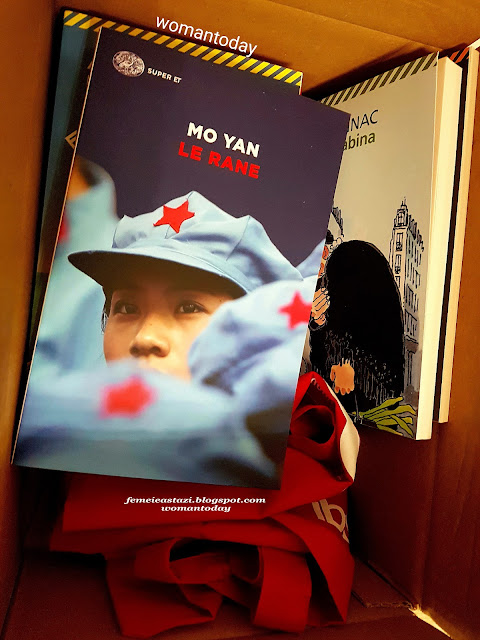


IT: Letto e recensito il romanzo LE RANE di MO YAN - ISBN 978-88-06-21996-3, Einaudi, Super ET, traduzione in italiano di Patrizia Liberati, 2014

ENG: Read and reviewed the novel LE RANE by MO YAN - ISBN 978-88-06-21996-3, Einaudi, Super ET, translation by Patrizia Liberati, 20141


Disclaimer e premesse / Disclaimer and premises

IT: Questo post non ha scopi commerciali e non incoraggia vendite, denominazioni, immagini ed eventuali link presenti sono solo a scopo informativo. Le immagini ritraggono un prodotto acquistato regolarmente che ho valutato in quanto consumatore. Questo post è di mia completa creazione per quanto riguarda contenuti, foto e idee espresse. Prima di usare qualsiasi parte di questo post siete pregati di contattarmi e nel caso vi abbia ispirato per altre creazioni, vi chiedo cortesemente di menzionare la fonte.

ENG: This post has no commercial purposes and does not encourage sales, names, pictures and eventual links are present only for an informative purpose. The images depict a regularly purchased product that I have evaluated as a consumer.This post is of my entire creation as for contents, photos and expressed ideas. Before using any part of it, you need to contact me and in case it inspired you for other creations, I gently ask you to mention the source.


giovedì 7 aprile 2022

Canne al Vento di Grazia Deledda - recensione letteraria / Reeds by Grazia Deledda - book review


Carissimi lettori,

Oggi ritorno con una recensione letteraria, la recensione del libro Canne al vento della scrittrice italiana vincitrice del premio Nobel per la letteratura nel 1926, Grazia Deledda. Canne al vento, la sua opera più famosa, fu pubblicata nel 1913, mentre nel 1958 apparve la trasposizione televisiva sotto la direzione di Mario Landi. 

I personaggi principali di questo romanzo sono Efix, servo dei baroni Pintor, le dame Pintor, Noemi, Ruth ed Ester e Giacinto,il figlio di Lia Pintor, la sorella sfuggita all’oppressione del padre, Zame Pintor. Altri personaggi importanti per la trama di questo romanzo sono Don Pedru, cugino delle sorelle Pintor e pretendente alla mano di Noemi Pintor, Grixenda, ragazza semplice che s’innamora del giovane Giacinto e Kallina, l’usuraia di Galte.

Canne al vento è essenzialmente un romanzo sociale perché rispecchia la società sarda alla fine del XIX secolo, la stratificazione sociale e le dinamiche innescate da questa differenziazione. Gli aspetti centrali della narrazione di questo romanzo sono la povertà, il pensiero superstizioso e scaramantico, l’onore, la disuguaglianza sociale e la ribellione contro i precetti di questa società. L’autrice ha dipinto con grande talento tutti questi aspetti arricchendoli con le riflessioni e le sensazioni dei suoi personaggi. Il personaggio principale è Efix che con il suo rispetto per le classi sociali, e avendo profondamente interiorizzato il suo ruolo di servo, rappresenta e rispecchia il vecchio ordinamento di questa società. Efix è un personaggio molto complesso che combatte un profondo dilemma in quanto segretamente innamorato di una delle sue padrone e timoroso di Dio, cerca l’espiazione per una colpa che lo tormenta da anni. Al polo opposto abbiamo Giacinto, un giovane inquieto, mitomane, sociopatico e mortificato per la sua situazione sociale che cerca a tutti costi una vita agiata. L’incontro con Efix cambierà la vita ad entrambi e segnerà quello che sarà il loro destino. L’azione del romanzo si svolge intorno alle loro azioni mentre le donne in questo romanzo hanno solo un ruolo di spettatore passivo. Le dame Pintor sono donne fiere, con convinzioni alquanto antiquate e nonostante il loro desiderio di rivolta e cambiamento, rimangono passive e inerte. L’unica a rifiutare di sottomettersi al padre è Lia Pintor che fugge segretamente dall’isola innescando cosi la trama di questo romanzo.

In questo romanzo Grazia Deledda dipinge accuratamente le tradizioni e la vita in quel momento storico in Sardegna senza fermarsi solo ai confini dell’isola. Il libro è condito con innumerevoli riferimenti alla società italiana in generale, riferimenti reali provenienti dalle esperienze dei nostri personaggi ma anche riferimenti scaturiti nell’immaginazione di coloro che nutrono il desiderio di lasciare l’isola.

La narrazione è abbastanza fluida, ricca in dialoghi ma soprattutto in momenti di riflessioni che a tratti rallentano il flusso della lettura. Il talento di Deledda consiste anche in far immergere il lettore nel paesaggio e le usanze di un tempo molto lontano e molto diverso. Mi rendo conto che è molto difficile per noi capire certi concetti come la stratificazione sociale, l’obbedienza cieca davanti a colui che copre il ruolo di capo di famiglia, e le superstizioni infondate, ma proprio per questo motivo Canne al vento ha quasi il ruolo anche di romanzo storico. Consiglio questo romanzo a tutti coloro che cercano di scoprire l’Italia del XIX secolo e le costumanze sarde su uno sfondo di inquietudini sociali e amori incompiuti.


ENGLISH

Dear readers,

Today I return with a literary review, the review of the book Reeds in the Wind by the Italian writer Grazia Deledda, winner of the Nobel Prize for literature in 1926. Reeds in the Wind, her most famous work, was published in 1913, while in 1958 the television transposition appeared under the direction of Mario Landi. 

The main characters of this novel are Efix, servant of the Pintor barons, the ladies Pintor, Noemi, Ruth and Ester and Giacinto, the son of Lia Pintor, the sister who escaped the oppression of her father, Zame Pintor. Other important characters for the plot of this novel are Don Pedru, cousin of the Pintor sisters and suitor to the hand of Noemi Pintor, Grixenda, a simple girl who falls in love with the young Giacinto and Kallina, the usurer of Galte.

Reeds in the wind is essentially a social novel because it reflects Sardinian society at the end of the 19th century, the social stratification and dynamics triggered by this differentiation. The central aspects of the narrative of this novel are poverty, superstitions and superstitious thought, honor, social inequality and rebellion against the precepts of this society. The author has painted all these aspects with great talent, enriching them with the reflections and feelings of her characters. The main character is Efix who with his respect for social classes, and having deeply internalized the role of servant, represents and reflects the old order of this society. Efix is a very complex character who fights a profound dilemma as secretly in love with one of his mistresses and fearful of God, he seeks atonement for a guilt that has tormented him for years. At the opposite pole we have Giacinto, a restless young man, mythomaniac, sociopathic and mortified by his social situation who is looking for a comfortable life at all costs. The meeting with Efix will change the life of both of them and will mark their destiny. The novel's action revolves around their actions while the women in this novel only have the role of passive spectators. The Pintor ladies are proud women, with somewhat antiquated beliefs and despite their desire for revolt and change, they remain passive and inert. The only one who refuses to submit to her father is Lia Pintor who secretly escapes from the island thus triggering the plot of this novel.

In this novel, Grazia Deledda painstakingly paints the traditions and life in that historical moment in Sardinia without abiding only to the borders of the island. The book is seasoned with countless references to Italian society in general, real references from the experiences of our characters but also references that have sprung up in the imagination of those who harbor the desire to leave the island.

The narration is quite fluid, rich in dialogues but above all in moments of reflection that at times slow down the flow of reading. Deledda's talent also consists in letting the reader immerse in the landscape and customs of a very distant and very different time. I realize that it is very difficult for us to understand certain concepts such as social stratification, blind obedience to the one who covers the role of head of the family, and unfounded superstitions, but precisely for this reason Reeds in the Wind almost plays the role of historical fiction also. I recommend this novel to all those seeking to discover 19th-century Italy and Sardinian customs against a background of social unrest and unfinished love affairs.


IT: Ho letto e recensito Canne al Vento di Grazia Deledda, editore Classic House Book, collana I Capolavori della letteratura, 2017. Recensione pubblicata sotto le regolamentazioni di fair use.

ENG: I have read and reviewed Canne al vento by Grazia Deledda, editor Classic House Book, series I Capolavori della Letteratura, 2017. Review pubblished under the regulations of fair use.


Disclaimer e premesse / Disclaimer and premises

IT:Questo post non ha scopi commerciali e non incoraggia vendite, denominazioni, immagini ed eventuali link presenti sono solo a scopo informativo. Le immagini ritraggono un prodotto acquistato regolarmente che ho valutato in quanto consumatore. Questo post è di mia completa creazione per quanto riguarda contenuti, foto e idee espresse. Prima di usare qualsiasi parte di questo post siete pregati di contattarmi e nel caso vi abbia ispirato per altre creazioni, vi chiedo cortesemente di menzionare la fonte.

ENG: This post has no commercial purposes and does not encourage sales, names, pictures and eventual links are present only for an informative purpose. The images depict a regularly purchased product that I have evaluated as a consumer.This post is of my entire creation as for contents, photos and expressed ideas. Before using any part of it, you need to contact me and in case it inspired you for other creations, I gently ask you to mention the source.


domenica 21 novembre 2021

Gli Ultimi testimoni di Svetlana Aleksievic - recensione letteraria / The Last Witnesses by Svetlana Aleksievic - book review


Carissimi lettori,

Inizio questa recensione confessando che questa è stata la lettura più sconvolgente, straziante e genuina che io abbia mai fatto nella mia vita e detto da una persona che legge principalmente libri drammatici, questo significa molto. La scrittrice Svetlana Aleksievic ha vinto un premio Nobel per la letteratura ed è stata censurata, perseguitata e la sua opera bandita dal paese dal regime di Aleksandr Lukasenko in quanto nel suo lavoro di giornalista, cronista e scrittrice dei principali eventi dell’Unione Sovietica nella seconda metà del XX secolo ha criticato anche il regime dittatoriale in Bielorussia. Gli Ultimi testimoni sono essenzialmente una raccolta preziosa di testimonianze di bambini russi e bielorussi che hanno vissuto l’orrore della seconda guerra mondiale. Questo libro è stato pubblicato inizialmente nel 1985 ma censurato dal regime sovietico e la sua versione definitiva, quella che ho letto anch’io, è stata pubblicata nel 2005. In questo libro ho avuto l’occasione di scoprire attraverso gli occhi e i ricordi di bambini la storia di questa guerra, una storia diversa da quella ufficiale, una storia dove non si parla di solo numeri, date e luoghi ma si racconta il dolore, il terrore, la paura, la fame e l’angoscia vissuta dai più piccoli. Vedere questo conflitto attraverso occhi innocenti che non conoscono il fenomeno mi ha aperto la mente sulle cose semplici che diamo per scontate ma che alla fine sono le più importanti. Tutti questi bambini sono stati colti di sorpresa, nessuno aveva spiegato loro cosa significasse realmente la guerra, hanno dovuto scoprire nel modo più doloroso che la guerra era quando i padri non c’erano più, che nella guerra non morivano solo gli uomini, che non era una questione di ore o giorni come avevano visto nei film e che il bambino più fortunato e ricco il bambino che aveva ancora genitori e fratelli. La maggior parte dei bambini intervistati aveva perso almeno un genitore, tanti erano rimasti orfani ed erano stati addirittura separati dai loro fratelli e il loro unico riparo erano gli orfanotrofi. Non conoscevano il rombo degli aerei e il suono delle mitragliatrici o dei bombardieri ma hanno imparato a riconoscerlo e a nascondersi quando arrivava invidiando i coleotteri perché non potevano infilarsi ovunque e sparire come loro. Non potevano immaginare che le loro case sarebbero state incendiate con bambini e anziani all’interno, che le loro nonne sarebbero state stuprate, le loro madri seviziate o che avrebbero dovuto persino mangiare i loro amati animali domestici, cani, gatti e uccelli per non morire a loro turno di fame durante un assedio durato novecento giorni. Questi bambini non potevano capire come una persona di bel aspetto, curata, elegante e dagli occhi azzurri possa fucilare le madri davanti ai figli o chiedere ad un anziano di scavare una fossa e seppellirlo vivo. Non potevano capire perché degli adulti provenienti da paesi civili pensassero che le trasfusioni di sangue da bambini biondi con occhi azzurri avessero poteri curativi miracolosi o perché la vegetazione si erigeva più rigogliosa nei posti dove buttavano la cenere dei falò umani… La guerra gli ha fatti scoprire che il suono di una testa fracassata a colpi di martello era simile al rumore di una zucca matura spaccata, gli ha insegnato a sparare e a seppellire i morti, la guerra li ha derubati della loro infanzia rimpiazzandola con delle cicatrici tremende, cicatrici simili ai fiorellini sulle tempie delle loro madri che non sarebbero sparite solo perché ci si metteva una benda…

Io ho raccontato qui solo alcuni episodi menzionati nelle testimonianze di questi bambini ma credetemi, il libro è fatto solo di questo, racconti dolorosi. Nonostante la narrazione fosse scorrevole perché raccontata nel linguaggio di gente semplice e quindi il libro si poteva finire tranquillamente in alcune ore, io ci ho impiegato settimane perché avevo bisogno di fermarmi e fare pause di giorni fra un orrore e l’altro. Non è un libro che si legge a il cuor leggero ma è un libro che va letto perché dobbiamo tutti conoscere cos’è veramente la guerra, cosa toglie e cosa da, dobbiamo scoprire anche noi la saggezza del dopo guerra finché abbiamo la possibilità di farlo dalla comodità del nostro divano.

Questo libro è la testimonianza di bambini che hanno dimenticato il loro vero nome dopo che sono stati strappati alla madre, bambini che hanno imparato a contare sentendo il rumore delle bombe e toccando le loro ferite e bambini che hanno scoperto che non tutte le preghiere vengono ascoltate. Coloro che hanno avuto la fortuna di crescere e quindi raccontare hanno capito che raccontare quello che hanno visto e vissuto è un dovere, un dovere verso coloro che non ce l’hanno fatta e un dovere verso coloro che arrivano per aiutarli ad evitare simili atrocità.

Concludo questa recensione con una frase del libro, una domanda che uno di questi bambini sopravvissuti si è posto per tutta la vita, una domanda che racchiude in sé tutte le altre domande: “E adesso vorrei chiedere: ma Dio ha visto tutto questo? E cosa ha pensato?”


ENGLISH

Dearest readers,

I start this review by confessing that this was the most shocking, heartbreaking and genuine reading I have ever done in my life and coming from a person who reads mostly drama books, that means a lot. Writer Svetlana Aleksievic won a Nobel Prize in Literature and was censored, persecuted and her work banned from the country by the regime of Aleksandr Lukasenko as in her work as a journalist, chronicler and writer of major Soviet Union events in the second half the twentieth century also criticized the dictatorial regime in Belarus. The Last Witnesses are essentially a valuable collection of testimonies from Russian and Belarusian children who experienced the horror of World War II. The Last Witnesses are essentially a valuable collection of testimonies from Russian and Belarusian children who experienced the horror of World War II. This book was initially published in 1985 but censored by the Soviet regime and its final version, the one I also read, was published in 2005. In this book I had the opportunity to discover through the eyes and memories of children the story of this war, a story different from the official one, a story that doesn't consist only in numbers, dates and places but describes the pain, terror, fear, hunger and anguish experienced by children. Seeing this conflict through innocent eyes that do not know the phenomenon has opened my mind to the simple things that we take for granted but which are ultimately the most important. All these children were taken by surprise, no one had explained to them what the war really meant, they had to discover in the most painful way that the war was when the fathers were gone, that during war not only men died, that it was not a matter of hours or days as they had seen in the movies and that the luckiest and richest child is the child who still had parents and siblings. Most of the children interviewed had lost at least one parent, many had been orphaned and had even been separated from their siblings and their only shelter was the orphanage. They did not know the roar of planes and the sound of machine guns or bombers but they learned to recognize it and hide when it arrived envying the beetles because they could not slip everywhere and disappear like them. They could not imagine that their homes would be set on fire with children and the elderly inside, that their grandmothers would be raped, their mothers tortured or that they would even have to eat their beloved pets, dogs, cats and birds in order not to die of starving during a siege that lasted nine hundred days. These children could not understand how a handsome, well-groomed, elegant and blue-eyed person can shoot mothers in front of their children or ask an elderly person to dig a grave and bury him alive. They could not understand why adults from civilized countries thought that blood transfusions from blond children with blue eyes had miraculous healing powers or why the vegetation grew more luxuriant in places where ashes of human bonfires had been dumped... The war made them discover that the sound of a head being smashed with a hammer was similar to the sound of a cracked ripe pumpkin, taught them to shoot and bury the dead, the war robbed them of their childhood and replaced it with terrible scars, flower-like scars similar to those on the temples of their mothers that donp't disappear just because a bandage is put on...

I have narrated here only a few episodes mentioned in the testimonies of these children but believe me, the book is made of only this, painful stories. Despite the fact that the narration was smooth because it was told in the language of simple people and therefore the book could be finished easily in a few hours, it took me weeks because I needed to stop and pause for days between one horror and another. It is not a book that could be read with a light heart but it is a book that must be read because we must all know what war really is, what it takes away and what it gives, we too must discover post-war wisdom as long as we can do it from the comfort of our sofa.

This book is the testimony of children who have forgotten their real names after they were taken from their mothers, children who learned to count by hearing the sound of bombs and touching their wounds, and children who have discovered that not all prayers are heard. Those who have had the fortune to grow up and therefore talk about it, have understood that telling what they have seen and experienced is a duty, a duty to those who have not made it, and a duty to those who will arrive in order to help them avoid similar atrocities.

I conclude this review with a sentence from the book, a question that one of these surviving children has asked himself all his life, a question that holds all the other questions: “And now I would like to ask: has God seen all this? And what did he think? "


Disclaimer e premesse / Disclaimer and premises

IT:Questo post non ha scopi commerciali e non incoraggia vendite, denominazioni, immagini ed eventuali link presenti sono solo a scopo informativo. Le immagini ritraggono un prodotto acquistato regolarmente che ho valutato in quanto consumatore e lettore. Questo post è di mia completa creazione per quanto riguarda contenuti, foto e idee espresse. Prima di usare qualsiasi parte di questo post siete pregati di contattarmi e nel caso vi abbia ispirato per altre creazioni, vi chiedo cortesemente di menzionare la fonte.

ENG: This post has no commercial purposes and does not encourage sales, names, pictures and eventual links are present only for an informative purpose. The images depict a regularly purchased product that I have evaluated as a consumer and reader. This post is of my entire creation as for contents, photos and expressed ideas. Before using any part of it, you need to contact me and in case it inspired you for other creations, I gently ask you to mention the source.


Recommended post

Solo Cose Belle ottobre 2024 parte 1 / Only Beautiful Things October 2024 part 1

ITALIANO   Ciao carissimi amici,  Finalmente riesco a scrivere il post in merito alle cose belle che ho vissuto durante il mese corrente e s...