Visualizzazione post con etichetta lectura. Mostra tutti i post

venerdì 10 luglio 2026

Mattatoio numero 5 di Kurt Vonnegut - recensione di libro / Slaughterhouse Number 5 by Kurt Vonnegut - book review


Ciao carissimi amici e lettori,

Oggi condivido con voi la recensione di un libro che amo molto, un libro che ho letto, anzi, ho divorato, con la matita in mano, sottolineando frasi chiave e rileggendole infinite volte per capire il messaggio, e arrivare in fondo alla questione. Avrete già compreso che questo libro, nonostante avesse solo 196 pagine, più un saggio che un romanzo, è ricchissimo passaggi con di tanti spunti di riflessione. Il titolo potrebbe mettere soggezione, “mattatoio” come parola dà i brividi, ma, in realtà il titolo completo è Mattatoio numero 5 o La Crociata dei bambini ed è un'opera-chiave del pacifismo moderno, un romanzo sul valore effimero dell'esistenza. L'autore è Kurt Vonnegut, uno scrittore e giornalista americano, noto per i suoi romanzi satirici e dall'umorismo nero.

La Crociata dei bambini, non ripercorre la Crociata dei fanciulli del 1212 come evento, ma si riferisce alle guerre come concetto e stato di fatto dove persone adulte e mature, decidono di iniziar guerre che non combatteranno mai direttamente, guerre dove persone appena usciti dalla pubertà (bambini in confronto a chi prende le decisioni) andranno a morire. L’autore dedica questo romanzo alla moglie di un suo compagno d’armi e prigioniero a Dresda, Mary O’Hare. Quando Vonnegut cercò Bernard O’Hare per ripercorre i ricordi della guerra in modo da poter scrivere un libro, sua moglie lo accusa di voler scrivere un libro che celebra la guerra e che servirà alla a realizzare adattamenti cinematografici dove reciteranno attori come John Wayne e Frank Sinatra e incoraggeranno ancora più giovani ad arruolarsi e andare a morire. Quando l’autore rivela il titolo completo del romanzo “la crociata dei bambini”, i due trovano un punto d’incontro e Mary capisce di cosa parlerà il libro di Vonnegut. In sostanza, Mattatoio numero 5 è un romanzo anti-guerra semi-autobiografico intriso di fantascienza, di spunti di riflessione e concetti filosofici.

L’autore, Kurt Vonnegut, lottò durante la seconda guerra mondiale e fu realmente imprigionato dalle forze tedesche a Dresda e quindi testimoniò di persona la distruzione e l’annientamento della popolazione civile di Dresda da parte delle forze alleate. Questo romanzo s’ispira realmente alla sua prigionia a Dresda, nel Mattatoio numero 5, Schlachthof-fünf in tedesco, ma il personaggio principale non è lui, anche se occasionalmente ci imbatteremo anche nelle azioni dell’autore, ma Billy Pilgrim, un soldato americano disorientato, fatalista e male addestrato che odia la guerra e si rifiuta di combattere, un americano medio, un uomo qualunque con però l'eccezionale capacità di passare da una dimensione spaziale all'altra e viaggiare nello spazio e nel tempo. Per quanto riguarda il lato fantascientifico del libro, io potrei supporre che sia una metafora per il disturbo da stress post-traumatico con il quale tanti dei soldati tornavano a casa ma soprattutto credo che sia l’idea geniale dello scrittore per poter parlare di eventi atroci senza impazzire e senza far allontanare il lettore. Senza nulla togliere ai tragici eventi descritti, Vonnegut descrive questi eventi offrendo anche una valvola di sfogo quando le atrocità si accumulano. Lo stesso per la frase “Cosi va la vita” usata sia da Billy Pilgrim, sia dall’autore ogni qualvolta si narra di evento distruttivo, della morte di qualcuno, della perdita e della sconfitta, del calvario e del dolore, è un modo per accettare l’impotenza dell’essere umano davanti a forze ed eventi che superano le sue capacità. Per fare un paragone, cercare di fermare o spiegare la morte equivale a cercare di trovare il pianeta Tralfamadore, la destinazione dei viaggi nell’universo di Billy Pilgrim.

Il romanzo è ricco di personaggi, ognuno designato illustrare un concetto. Il personaggio principale è Billy Pilgrim, assistente cappellano ma di lui abbiamo parlato abbastanza, Roland Weary, un giovane aggressivo e sciovinista, catturato anch’esso assieme a Billy che continuerà ad accusare Billy della loro cattura senza mai scoprire che questa cattura salvò la vita ad entrambi, Paul Lazzaro, il solito individuo americano assetato di possedere un’arma, mosso solo dalla vendetta e senza bisogno di motivo per odiare, Edgar Derby, il professore di liceo che si arruola volontariamente per servire il paese e che affronta una sorte a dir poco ironica, Eliot Rosewater, paziente di una clinica psichiatrica che introduce Billy alle opere di fantascienza di Kilgore Trout e che spesso e paradossalmente viene usato dall’autore per enunciare ovvie verità e ragionamenti sensati, Bertram Rumfoord, professore di storia alla Harvard, prevenuto, negazionista e volutamente malinformato e non per ultimo, Kilgore Trout, lo scrittore di fantascienza che non riesce a farsi leggere o ad arrivare alle preferenze dei lettori americani. La famiglia di Billy, una moglie obesa e senza grandi doti intellettuali se non quelle di essere onesta e critica verso sè stessa, un figlio che diventerà un soldato berretto verde pluridecorato nella guerra del Vietnam ed una figlia iperprotettiva e assillante, completano il quadro dei personaggi di questo romanzo. Non vorrei chiudere il capitolo personaggi senza parlare dei soldati tedeschi ed i soldati britannici anch’egli prigionieri di guerra. L’autore usa questi personaggi per evidenziare il fatto che i soldati non si detestano apriori, anzi, sono capaci di rispetto verso coloro che più rispecchiano la loro idea di nemico e per implicito la propria ideologia e persona. Non per diminuire le capacità organizzative del popolo britannico ma quando l’autore menziona il fatto che i prigionieri britannici hanno ricevuto dalle croci rosse di tutto il mondo 500 volte più aiuti rispetto ad altri prigionieri che le hanno permesso di mantenersi più in forma, guadagnare il rispetto dei tedeschi e perciò non finire ai lavori forzati, l’autore sottolinea l’ovvietà dell’ineguaglianza fra persone in qualsiasi conflitto.

Il romanzo Il Mattatoio numero 5 nelle sue poco meno di 200 pagine tratta diversi argomenti degni di riflessione, io stessa ho letto questo romanzo con la matita in mano prendendo innumerevoli appunti. Ovviamente non posso discutere tutti gli argomenti in questa recensione perché diventerebbe più lunga del romanzo stesso ma vorrei soffermarmi sul binomo terrestro/materiale vs religioso/spirituale. In un mondo dove guerre, infanticidi, bombardamenti e ogni sorte di ingiustizie accadono, appellarsi alla spiritualità finirà solo per limitarci e predisporci alla sofferenza mentre un approccio materiale e scientifico non solo potrebbe offrire spiegazioni ma anche compensare e risanare in un certo modo i traumi. Frasi come “cosi va la vita” non rilevano fatalismo ma bensì ovviano la caratteristica inalterabile dell’accaduto. Inoltre la parola “puu-tii-uiit” (poo-tee-weet in inglese), cioè il cinguettio dell’uccellino che ignaro del disastro si poggia sulle rovine, esprime il fatto che non c’è parola sensata che possa usarsi per descrivere quello che è appena accaduto. L'unico modo per narrare questo terribile episodio, di per sé indicibile e ripugnante è quello visionario e fantasmagorico, coniugato ad una comicità paradossale, che Vonnegut tratta con maestria in una danza quasi allegorica, sorriso e dolore, grottesco e spensieratezza. Se consiglio questo romanzo? Assolutamente SI perché è uno di quei libri che va letto almeno una volta nella vita, con la matita in mano per non perdere nessuno delle migliaia di spunti su cui riflettere.


ENGLISH

Hello dear friends and readers,

Today I share with you the review of a book that I love very much, a book that I read, or rather, I devoured, with pencil in hand, underlining key sentences and rereading them countless times to understand the message, to get to the bottom of the matter. You will have already understood that this book, despite having only 196 pages, more of an essay than a novel, is full of many food for thought passages. The title could be intimidating, “slaughterhouse” as a word might give the shivers, but in reality the full title is Slaughterhouse Number 5 or The Children's Crusade and it is a key work of modern pacifism, a novel on the ephemeral value of existence. The author is Kurt Vonnegut, an American writer and journalist, famous for his satirical and darkly humorous novels.

The Children's Crusade does not retrace the Children's Crusade or Crusade of the Innocents of 1212 as an event, but refers to wars as a concept and state of fact where adults and mature people decide to start wars that they will never fight directly, wars where people who have just come out of puberty (children compared to those who make the decisions) will go to die. The author dedicates this novel to the wife of one of his comrades in arms and a prisoner in Dresden, Mary O'Hare. When Vonnegut seeks out Bernard O'Hare to retrace his memories of the war so he can write a book, his wife accuses him of wanting to write a book that celebrates the war and that will serve to make film adaptations where actors like John Wayne and Frank Sinatra will act and will encourage even more young people to enlist and go to die. When the author reveals the full title of the novel "the children's crusade" the two find a meeting point and Mary understands what Vonnegut's book will be about. In essence, Slaughterhouse-Five is a semi-autobiographical anti-war novel steeped in science fiction, thought-provoking insights, and philosophical concepts.

The author, Kurt Vonnegut, fought during World War II and was actually imprisoned by German forces in Dresden and thus witnessed firsthand the destruction and annihilation of the civilian population of Dresden by the Allied forces. This novel is actually inspired by his imprisonment in Dresden, in Slaughterhouse Number Five, Schlachthof-fünf in German, but the main character is not him, even though we will occasionally come across the author's actions, but Billy Pilgrim, a disoriented, fatalistic and poorly trained American soldier who hates war and refuses to fight, an average American, an ordinary man but with the exceptional ability to pass from one spatial dimension to another and travel in space and time. As for the science fiction side of the book, I could assume that it is a metaphor for the post-traumatic stress disorder that many of the soldiers returned home with but above all I think it is the writer's brilliant idea to be able to talk about atrocious events without going crazy and without alienating the reader. Without taking anything away from the tragic events described, Vonnegut describes these events also offering a safety valve when the atrocities pile up. The same goes for the phrase "That's life" used by both Billy Pilgrim and the author whenever he talks about a destructive event, someone's death, loss and defeat, ordeal and pain, it is a way to accept the impotence of the human being in the face of forces and events that exceed his capabilities. To make a comparison, trying to stop or explain death is equivalent to trying to find the planet Tralfamadore, the destination of Billy Pilgrim's travels in the universe.

The novel is full of characters, each designed to illustrate a concept. The main character is Billy Pilgrim, assistant chaplain but we have talked enough about him, Roland Weary, an aggressive and chauvinistic young man, also captured together with Billy who will continue to accuse Billy of their capture without ever discovering that this capture saved both of their lives, Paul Lazzaro, the usual American individual thirsty for owning a gun, moved only by revenge and without needing a reason to hate, Edgar Derby, the high school teacher who voluntarily enlists to serve the country and who faces a fate that is nothing short of irony, Eliot Rosewater, a patient in a psychiatric clinic who introduces Billy to the science fiction works of Kilgore Trout and who is often and paradoxically used by the author to state obvious truths and sensible reasoning, Bertram Rumfoord, a history professor at Harvard, prejudiced, a denier and deliberately misinformed and last but not least, Kilgore Trout, the science fiction writer who cannot get himself read or reach the preferences of American readers. Billy's family, an obese wife with no great intellectual gifts other than being honest and critical of herself, a son who will become a highly decorated Green Beret soldier in the Vietnam War and an overprotective and nagging daughter, complete the picture of the characters in this novel. I would not like to close the chapter on characters without talking about the German soldiers and the British soldiers who were also prisoners of war. The author uses these characters to highlight the fact that soldiers do not hate each other a priori, on the contrary, they are capable of respecting those who most reflect their idea of ​​an enemy and implicitly their own ideology and person. Not to diminish the organizational skills of the British people but when the author mentions the fact that British prisoners have received 500 times more aid from the Red Crosses around the world than other prisoners which has allowed them to stay in better shape, earn the respect of the Germans and therefore not end up in forced labor, the author underlines the obviousness of inequality between people in any conflict.

The novel Slaughterhouse Number 5 in its little less than 200 pages deals with several topics worthy of reflection, I myself read this novel with a pencil in my hand taking countless notes. Obviously, I cannot discuss all the topics in this review because it would become longer than the novel itself but I would like to focus on the terrestrial/material vs religious/spiritual binomial. In a world where wars, infanticides, bombings and all sorts of injustices happen, appealing to spirituality will only end up limiting us and predisposing us to suffering while a material and scientific approach could not only offer explanations but also compensate and heal in a certain way the traumas. Phrases like “that’s life” do not reveal fatalism but rather obviate the unalterable characteristic of what happened. Furthermore, the word “poo-tee-weet”, that is the chirping of the bird that unaware of the disaster lands on the ruins, expresses the fact that there is no sensible word that can be used to describe what has just happened. The only way to narrate this terrible episode, in itself unspeakable and repugnant, then seemed to Vonnegut to be the visionary and phantasmagorical one, combined with a paradoxical comedy, which he masterfully treats in an almost allegorical dance, smile and pain, grotesque and lightheartedness. Do I recommend this novel? Absolutely YES because it is one of those books that should be read at least once in a lifetime, with a pencil in hand so as not to miss any of the thousands of ideas to reflect on.


IT: Per realizzare questa recensione ho letto e recensito il romanzo Il Mattatoio numero 5 di Kurt Vonnegut, editore Feltrinelli, collana Universale Economica Feltrinelli 2018, ISBN 978-88-07-88505-1

ENG: To write this review I read and reviewed the novel Slaughterhouse-Five by Kurt Vonnegut, publisher Feltrinelli, Universale Economica Feltrinelli series 2018, ISBN 978-88-07-88505-1


Disclaimer e premesse / Disclaimer and premises

IT: Questo post non ha scopi commerciali e non incoraggia vendite, denominazioni, immagini, opinioni ed eventuali link presenti sono solo a scopo informativo. Le immagini ritraggono un prodotto acquistato regolarmente che ho valutato in quanto consumatore e lettore. Questo post è di mia completa creazione per quanto riguarda contenuti, foto e idee espresse. Prima di usare qualsiasi parte di questo post siete pregati di contattarmi e nel caso vi abbia ispirato per altre creazioni, vi chiedo cortesemente di menzionare la fonte.

ENG: This post has no commercial purposes and does not encourage sales, names, pictures, opinions and eventual links are present only for an informative purpose. The images depict a regularly purchased product that I have evaluated as a consumer and reader. This post is of my entire creation as for contents, photos and expressed ideas. Before using any part of it, you need to contact me and in case it inspired you for other creations, I gently ask you to mention the source.

martedì 14 ottobre 2025

Le aquile della notte di Alice Basso - recensione letteraria / The Eagles of the Night by Alice Basso - book review


Carissimi lettori,

Oggi ritorno con la recensione di un altro romanzo della scrittrice italiana Alice Basso, il quarto romanzo della saga poliziesca che ha come personaggio principale la dattilografa Anita Bo. Il titolo di questo romanzo è “Le Aquile della Notte” è l’avventura della signorina Bo e del suo capo, l’affascinante giornalista e scrittore Sebastiano Satta Ascona continua nel mese di ottobre e si avvicina sempre di più a quella che dovrebbe essere la fine della loro collaborazione.

Lo scenario di questo romanzo si sposta, Torino compare brevemente solo all’inizio e alla fine del romanzo in quanto i nostri personaggi sono in un certo modo “costretti” dal signor Sauro Bonatti, il futuro suocero di Sebastiano, ad abbandonare Torino per assistere alla vendemmia nella proprietà di Lupo Bonatti, fratello dell’appena menzionato capo del fascio. Lo scopo di questa trasferta è che Sebastiano si avvicini di più alla famiglia Bonatti, prendendo parte ad eventi che coinvolgano Mavi Bonatti, la fidanzata di Sebastiano, i suoi genitori e tutta la famiglia allargata, in modo che lui inizi a sentirsi parte della famiglia. Visto che Sebastiano ha un lavoro abbastanza impegnativo, Sauro Bonatti e Monné, il redattore di Saturnalia, concordano in una settimana di ferie nelle Langhe, dove metà giornata sarà dedicata alla vendemmia e l’altra metà alla traduzione e scrittura di articoli per Saturnalia. Siccome un giornalista a quei tempi non poteva mandare avanti da solo la rivista senza l’aiuto di una dattilografa, anche Anita viene coinvolta in questa “vacanza di lavoro”. Anita coglie subito la possibilità di andarci in modo da potersi prendere una pausa dalle preparazioni per l’imminente matrimonio con Corrado e dalla sua assillante madre.

Questo cambiamento porterà grandi cambiamenti nel rapporto fra i nostri personaggi principali ma non voglio aggiungere altro anche se, sicuramente capirete di quali cambiamenti si tratta una volta che arriverete alla descrizione della villa Fulva e della disposizione delle stanze degli invitati. Restando nella sfera nel lato rosa di questo romanzo, aggiungo anche che ci saranno nuovi pretendenti per l’affetto di Anita, si osserveranno nuove dinamiche fra gli altri personaggi, sia fra i loro amici più cari, sia fra i loro promessi sposi.

Per quanto riguarda l’aspetto giallo di questo romanzo, abbiamo un nuovo omicidio, abbiamo diversi sospetti e tantissime linee di investigazione da seguire. Nella nuova storia, i nostri personaggi incontreranno gruppi che si ribellano alla dittatura fascista e si faranno nuovi amici con cui condividere le passioni censurate dal regime. Non vorrei abbandonare questo argomento senza parlare dei ragionamenti, le considerazioni e le intuizioni che Alice Basso condivide attraverso i suoi personaggi. In questo senso trovo notevole la correlazione fra il crimine e la fragilità umana ed il modo in cui viene ignorata dal fascismo, la questione razzismo che sotto il fascismo diventa una “bonifica delle stirpi”, i tentacoli della censura fascista che coprono sempre più settori generando come contrappeso anche più modi di ribellione ed il cambiamento etico che affliggerà ogni individuo alla ricerca della giustizia e che finirà per accontentarsi del male minore o di lasciare impuniti i colpevoli purché vengano salvati degli innocenti. Alice Basso fa un lavoro eccelso, non solo nella ricerca del materiale che possa illustrare ed esemplificare i concetti espressi ma anche nel modo in cui usa i suoi personaggi per descrivere le situazioni. Visto che a questo punto parliamo del suo talento come scrittrice, vorrei menzionare anche la metafora vino e sangue che l’autrice usa per descrivere la sete di violenza e la fame di morte che alleggiano nelle menti e negli animi di diversi personaggi.

La narrazione è sempre molto fluida, i colpi di scena meglio preparati e celati rispetto al romanzo precedente il che ha reso questo romanzo molto più godibile ed apprezzabile. Detto ciò, consiglio questo romanzo a tutti coloro che cercano un buon thriller ed una più avvincente storia d’amore.


ENGLISH

Dear readers,

Today I return with a review of another novel by Italian author Alice Basso, the fourth in the detective series featuring typist Anita Bo. The title of this novel is "The Eagles of the Night," and it follows the adventures of Ms. Bo and her boss, the charming journalist and writer Sebastiano Satta Ascona continues through October and draws ever closer to what should be the end of their collaboration.

The setting of this novel shifts, Turin only briefly appearing at the beginning and end of the novel as our characters are somehow "forced" by Mr. Sauro Bonatti, Sebastiano's future father-in-law, to leave Turin to attend the grape harvest on the property of Lupo Bonatti, brother of the aforementioned Fascist leader. The purpose of this trip is for Sebastiano to become closer to the Bonatti family, taking part in events involving Mavi Bonatti, Sebastiano's fiancée, her parents, and the entire extended family, so that he begins to feel part of the family. Since Sebastiano has a fairly demanding job, Sauro Bonatti and Monné, the editor of Saturnalia, agree to a week's vacation in the Langhe, where half the day will be dedicated to the grape harvest and the other half to translating and writing articles for Saturnalia. Since a journalist at that time couldn't run the magazine alone without the help of a typist, Anita also becomes involved in this "working vacation." Anita immediately seizes the opportunity to go so she can take a break from preparing for her upcoming wedding to Corrado and from her nagging mother.

This change will bring major changes to the relationships between our main characters, but I don't want to say anything else, although you'll surely understand just how much change it involves once you get to the description of Villa Fulva and the layout of the guest rooms. Staying within the realm of the romance of this novel, I'll also add that there will be new suitors for Anita's affection, and new dynamics will emerge between the other characters, both their closest friends and their engaged spouses.

As for the detective story of this novel, we have a new murder, several suspects, and countless lines of investigation to pursue. In the new story, our characters will encounter groups rebelling against the fascist dictatorship and make new friends with whom they will share the passions censored by the regime. I wouldn't want to leave this topic without discussing the reasoning, considerations, and insights Alice Basso shares through her characters. In this sense, I find the correlation between crime and human frailty, and the way it is ignored by fascism, the issue of racism, which under fascism becomes a "cleansing of lineages," the tentacles of fascist censorship that increasingly cover more sectors, generating as a counterweight even more forms of rebellion, and the ethical shift that will afflict every individual seeking justice and who will end up settling for the lesser evil or leaving the guilty unpunished as long as innocents are saved, remarkable. Alice Basso does an excellent job, not only in finding material that can illustrate and exemplify the concepts expressed, but also in the way she uses her characters to describe situations. Since we're now discussing her talent as a writer, I'd also like to mention the metaphor of "blood and wine" that the author uses to describe the thirst for violence and hunger for death that linger in the minds and souls of several characters.

The narrative is consistently fluid, and the twists are better prepared and hidden than in the previous novel, which made this novel much more enjoyable and appreciable. That being said, I recommend this novel to anyone looking for a good thriller and a more compelling love story.


IT: per realizzare questa recensione ho letto in italiano il romanzo Le Aquile della notte di Alice Basso, editore Garzanti, 2023, ISBN 978-88-11-01290-0

ENG: To write this review I read in Italian the novel Le Aquile della notte by Alice Basso, Garzanti publisher, 2023, ISBN 978-88-11-01290-0


Disclaimer e premesse / Disclaimer and premises

IT: Questo post non ha scopi commerciali e non incoraggia vendite, denominazioni, immagini ed eventuali link presenti sono solo a scopo informativo. Le immagini ritraggono un prodotto acquistato regolarmente che ho valutato in quanto lettore. Questo post è di mia completa creazione per quanto riguarda contenuti, foto e idee espresse. Prima di usare qualsiasi parte di questo post siete pregati di contattarmi e nel caso vi abbia ispirato per altre creazioni, vi chiedo cortesemente di menzionare la fonte.

ENG: This post has no commercial purposes and does not encourage sales, names, pictures and eventual links are present only for an informative purpose. The images depict a regularly purchased product that I have evaluated as a reader. This post is of my entire creation as for contents, photos and expressed ideas. Before using any part of it, you need to contact me and in case it inspired you for other creations, I gently ask you to mention the source.

venerdì 11 ottobre 2024

Bassure di Herta Muller - recensione letteraria / Nadirs by Herta Muller - book review / Tinuturile joase de Herta Muller - recenzie de carte


Ciao carissimi amici e lettori,

Oggi ritorno finalmente con una recensione letteraria e anche stavolta recensisco un’altra opera di uno scrittore vincitore del premio Nobel per la letteratura. L’autore è la scrittrice, saggista e poetessa tedesca, nata in Romania, Herta Muller e il libro è la sua opera di debutto, Bassure (Niederungen titolo originale in tedesco). Bassure è una raccolta di racconti incentrata sulla sua infanzia a Nitchidorf, un piccolo comune composto da tre villaggi, nel distretto Timis, nella regione storica Banat. La sua infanzia passata nel periodo dopo la seconda guerra mondiale, descrive un periodo di povertà e privazioni comune a molti altri paesi d'Europa, ma i decenni successivi, gli anni della sua crescita e maturazione vengono trascorsi sotto il sigillo di un regime oppressivo, severo e umiliante e lasceranno la loro impronta profonda sulla scrittura e lo stile creativo di Herta Muller.

Per essere il primo libro di un autore, Bassure stupisce per la complessità della retorica, la poetica della narrazione e la forza della lirica. Si delinea già quello che è attualmente lo stile di Herta Muller, emblematico, metaforico e carico di contenuto. Questo libro in particolare descrive non solo il suo vissuto nella Romania comunista ma riproduce fedelmente la sfera emotiva di una giovane donna che inizia a conoscere il mondo tra l'oppressione e il desiderio di affermazione. Riferimenti al passato da soldato SS del padre e la sconfitta delle Germania nazista si celano dietro i capitoli Pere marce e A quel tempo in maggio mentre il tradimento del padre nasconde non solo quello che viene descritto come un rapporto di natura sessuale ma anche la punizione della madre con la reclusione in un lager riformatorio nell'unione sovietica come reazione del regime comunista verso i rumeni tedeschi che hanno combattuto con i nazisti. Grazie alla sua retorica, Herta Muller coglie l'abuso di un regime ignominioso e descrive la violenza della paura raccontando eventi banali con parole a portata di mano di tutti. Emblematico in questo senso è il capitolo Giorno feriale, quando tutto va bene perché tutto all'incontrario.

Tutto questo, forse, non risulterà evidente alla prima lettura, perché la maggior parte delle volte il senso di una poesia non risulta chiaro subito, ma lo fa alla seconda rilettura, o forse  alla terza volta, se non si conoscono gli avvenimenti. E non appena se ne comprende il significato, l'emozione della scoperta estasia il lettore, come se si trovasse davanti a un quadro di Picasso.

È vero, non è facile leggere Herta Muller, ma d'altronde non è facile leggere nessun scrittore insignito con il premio Nobel. Detto ciò, se ci armiamo di pazienza e disponibilità ad informarci e aprire la nostra mente, scopriremo il modo più sorprendente e genuino di ritrarre la paura e il trauma e descrivere il peccato, il tempo e la vergogna. Questa raccolta di racconti è come gli altri libri della Muller, una prosa poetica, perciò va letta come se fosse una poesia, restando attenti a cogliere tutte le figure retoriche. La qualità delle metafore è eccelsa, la scrittura di Herta Muller è carica e sublime allo stesso tempo, perciò io vi consiglio di non perdervi questo libro se siete amanti di rompicapi e di poesia.


ENGLISH

Hello dear friends and readers,

Today I finally return with a literary review and once again I review another work by a writer who won the Nobel Prize for Literature. The author is Romanian-born German writer, essayist and poet Herta Muller and the book is her debut work, Nadirs. Nadirs is a collection of short stories focusing on her childhood in Nitchidorf, a small municipality made up of three villages, in the Timis district, in the historical region Banat. His childhood spent in the period after the Second World War, describes a period of poverty and deprivation common to many other European countries, but the following decades, the years of his growth and maturation are spent under the seal of an oppressive, severe and humiliating regime and will leave their profound imprint on Herta Muller's writing and creative style.

For being the first book by an author, Bassure amazes with the complexity of the rhetoric, the poetics of the narrative and the strength of the lyric. What is currently Herta Muller's style is already emerging, emblematic, metaphorical and full of content. This book in particular describes not only her experience in communist Romania but faithfully reproduces the emotional sphere of a young woman who begins to understand the world between oppression and the desire for affirmation. References to the father's past as an SS soldier and the defeat of Nazi Germany are hidden behind the chapters Rotten Pears and That Time in May while the father's betrayal hides not only what is described as a sexual relationship but also the punishment of mother with imprisonment in a reformatory concentration camp in the Soviet Union as a reaction of the communist regime towards the German Romanians who fought with the Nazis. Thanks to her rhetoric, Herta Muller captures the abuse of an ignominious regime and describes the violence of fear by recounting banal events with words within everyone's reach. Emblematic in this sense is the chapter Weekday, when everything is fine because everything is backwards.

All this perhaps will not be obvious on the first reading, as more often than not, the meaning of a poem does not become clear immediately but upon rereading a second and perhaps even a third time, if the events are not known. And as soon as the meaning is understood, the emotion of discovery enraptures the reader, as if he were in front of a painting by Picasso.

It's true, it's not easy to read Herta Muller, but then again, it's not easy to read any writer awarded the Nobel Prize. That said, if we arm ourselves with patience and a willingness to inform ourselves and open our minds, we will discover the most surprising and genuine way to portray fear and trauma and describe sin, time and shame. This collection of short stories is like Muller's other books, a poetic prose, therefore it should be read as if it were a poem, being careful to grasp the all the rhetorical figures. The quality of the metaphors is excellent, Herta Muller's writing is charged and sublime at the same time, so I advise you not to miss this book if you love puzzles and poetry.


ROMANA

Dragi prieteni si cititori,

Astăzi revin in sfarsit cu o recenzie literară și revăd încă o dată o altă lucrare a unui scriitor care a câștigat Premiul Nobel pentru Literatură. Autoarea este scriitoarea, eseista și poeta germană de origine română Herta Muller, iar cartea este opera ei de debut, Tinuturile joase. Tinuturile joase este o colecție de nuvele care vizează copilăria sa din Nitchidorf, un mic municipiu format din trei sate, in judetul Timiș, din regiunea istorică Banat. Copilăria sa petrecută în perioada de după cel de-al Doilea Război Mondial, descrie o perioadă de sărăcie și deprivare comună multor altor țări europene, dar următoarele decenii, anii creșterii și maturizării sale, petrecuți sub pecetea unui regim opresiv, sever și umilitoar și își vor lăsa amprenta profundă asupra scrisului și stilului creativ al Hertei Muller.

Fiind prima carte a unui autor, Bassure uimește prin complexitatea retoricii, poetica narațiunii și puterea liricii. Ceea ce este în prezent stilul Hertei Muller este deja în curs de dezvoltare, emblematic, metaforic și plin de conținut. Această carte în special descrie nu doar experiența ei în România comunistă, ci reproduce cu fidelitate sfera emoțională a unei tinere care începe să înțeleagă lumea dintre opresiune și dorința de afirmare. Referirile la trecutul tatălui ca soldat SS și la înfrângerea Germaniei naziste sunt ascunse în spatele capitolelor Rotten Pears și That Time in May, în timp ce trădarea tatălui ascunde nu numai ceea ce este descris ca o relație sexuală, ci și pedeapsa mamei cu închisoarea în un lagăr de concentrare reformator din Uniunea Sovietică ca reacție a regimului comunist față de românii germani care au luptat cu naziștii. Datorită retoricii sale, Herta Muller surprinde abuzul unui regim ignominios și descrie violența fricii, relatând întâmplări banale cu cuvinte la îndemâna tuturor. Emblematic în acest sens este capitolul Ziua săptămânii, când totul este bine pentru că totul este invers.

Toate acestea, poate, nu vor fi evidente la prima lectură, deoarece de cele mai multe ori sensul unei poezii nu devine clar imediat, ci la recitirea a doua și poate chiar si a treia oară, dacă evenimentele nu sunt cunoscute. Și de îndată ce sensul este înțeles, emoția descoperirii îl extazia pe cititor, de parcă s-ar afla în fața unui tablou de Picasso.

Este adevărat, nu este ușor să o citești pe Herta Muller, dar, din nou, nu este ușor să citești niciun scriitoar laureat cu Premiul Nobel. Acestea fiind spuse, dacă ne înarmam cu răbdare și dorința de a ne informa și de a ne deschide mințile, vom descoperi cel mai surprinzător și autentic mod de a reda frica și trauma și de a descrie păcatul, timpul și rușinea. Această colecție de nuvele este ca și celelalte cărți ale lui Muller, o proză poetică, de aceea trebuie citită ca și cum ar fi o poezie, având grijă a intelege toate figurile retorice. Calitatea metaforelor este excelentă, scrisul Hertei Muller este încărcat și sublim în același timp, așa că vă sfătuiesc să nu ratați această carte dacă iubiți puzzle-urile și poezia.


Per questa recensione ho letto il libro Bassure di Herta Muller, editore Feltrinelli, collana I Narratori, settembre, 2010, ISBN 978-88-07-01817-6

For this review I read in Italian, the book Nadirs by Herta Muller, Feltrinelli publisher, I Narratori series, September 2010, ISBN 978-88-07-01817-6

Pentru aceasta recenzie am citit in limba italiana cartea Tinuturile joase de Herta Muller, editura Feltrinelli, seria Naratorii, septembrie 2010, ISBN 978-88-07-01817-6


Disclaimer e premesse / Disclaimer and premises

IT: Questo post non ha scopi commerciali e non incoraggia vendite, denominazioni, immagini ed eventuali link presenti sono solo a scopo informativo. Le immagini ritraggono un prodotto acquistato regolarmente che ho valutato in quanto consumatore. Questo post è di mia completa creazione per quanto riguarda contenuti, foto e idee espresse. Prima di usare qualsiasi parte di questo post siete pregati di contattarmi e nel caso vi abbia ispirato per altre creazioni, vi chiedo cortesemente di menzionare la fonte.

ENG: This post has no commercial purposes and does not encourage sales, names, pictures and eventual links are present only for an informative purpose. The images depict a regularly purchased product that I have evaluated as a consumer. This post is of my entire creation as for contents, photos and expressed ideas. Before using any part of it, you need to contact me and in case it inspired you for other creations, I gently ask you to mention the source.


mercoledì 7 settembre 2022

Norwegian Wood. Tokyo blues di Haruki Murakami - recensione letteraria / Norwegian Wood. Tokyo blues by Haruki Murakami - book review


Carissimi amici e lettori,

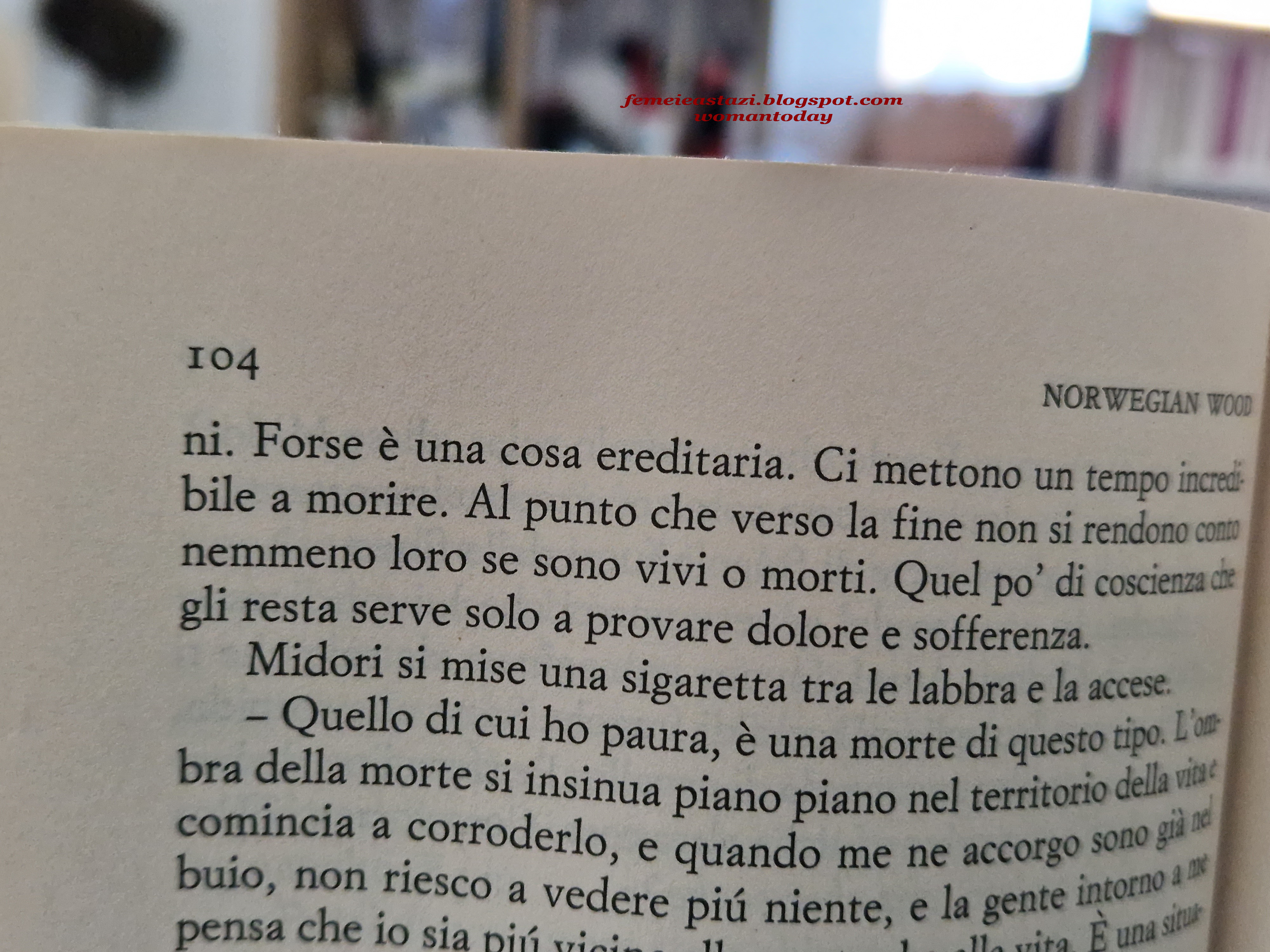
Oggi recensirò un nuovo romanzo del famoso scrittore giapponese HARUKI MURAKAMI. In passato avevo recensito A sud del confine, a ovest del sole e Kafka sulla spiaggia e stavolta recensirò Norwegian Wood, un romanzo scritto fra il 21 dicembre 1986 e 27 marzo 1987 mentre lo scrittore si trovava in viaggio da Mykonos, Grecia a Roma, Italia, con un salto intermezzo in Sicilia.

Come prima impressione, devo informarvi che questo è stato il romanzo che mi è piaciuto di più fra i tre romanzi che ho letto di questo autore. I tratti inconfondibili della narrazione di Murakami sono ben presenti, l’erotismo, le descrizioni precise e molto grafiche, la ricerca del proprio io, il tormento interiore ma, a differenza di Kafka sulla spiaggia per esempio, l’aspetto onirico è solo accennato mentre il lavoro nel costruire, illustrare e trasmettere i tratti caratteristici dei diversi personaggi è molto più marcato rispetto agli altri romanzi. Ho apprezzato moltissimo questi ultimi due aspetti e sono stata contenta a scoprire la capacità di caratterizzazione di Murakami soprattutto nel redigere quattro personaggi femminili tanto diversi, interessanti, emozionanti e specifici. Ovviamente, il personaggio principale (come anche negli altri romanzi di Murakami che ho letto) è un giovane maschio, Toru Watanabe e nonostante il lavoro nel costruire questo personaggio sia stato notevole, di grande importanza è anche il lavoro nel disegnare i due interessi romantici di Watanabe, la giovane Naoko, una ragazza bellissima ma insicura, affetta da psicosi e depressione che aveva perso il suo primo amore e Midori, una ragazza diretta, decisa, un po’ maschiaccio, ma anche molto sensuale che davanti alle prove durissime che il destino ha seminato nella sua traiettoria, sviluppa una corazza di cinismo e nevrosi. Altrettanto bene vengono ritratte anche Hatsumi, la ragazza del suo miglior amico al collegio e Reiki, una grande amica di Naoko alla clinica di assistenza e igiene mentale. Mentre i personaggi maschili, Kizuki, il miglior amico di Toru prima che arrivasse al collegio, Nagasawa, il suo amico e mentore in rapporti sessuali al collegio e Storm Trooper il suo compagno di stanza, vengono descritti solo attraverso i rapporti con il personaggio principale, i personaggi femminili vengono descritti anche tramite i loro rapporti con membri della famiglia, amici o da loro stessi. I personaggi maschili hanno principalmente una dimensione dinamica, tutti tranne Watanabe, lui, come personaggio principale, insieme ai personaggi femminili, ha anche una dimensione riflessiva, meditativa, provata.

La trama di questo romanzo riguarda i rapporti amorosi fra coppie di giovani e inizia con Watanabe l’amico della coppia Kizuki – Naoko, Midori amica di un Watanabe innamorato di Naoko, Watanabe amico della coppia Nagasawa – Hatsumi, e Reiko, amica della coppia Watanabe – Naoko. La dinamica di questi triangoli amorosi è singolare ed è la forza motrice di questo romanzo in quanto tutti gli altri personaggi vengono presentati solo in base ai rapporti con i membri di questi triangoli. Nonostante questo, Norwegian Wood, non è un romanzo d’amore ma un romanzo di formazione in quanto riguarda l’evoluzione di Toru Watanabe verso la maturità e l’età adulta. Ogni personaggio con cui entra in contatto lo arricchisce, lo aiuta a scoprire lati di se stesso che fino ad allora non conosceva o di cui non era consapevole. Ogni sofferenza, ogni godimento lascia un segno indelebile di cui il nostro personaggio farà tesoro. Più di una volta, l’autore ha paragonato Toru, attraverso le voci degli altri personaggi, al giovane Holden, paragone non destinato ad equiparare il lavoro di un giovane Murakami al leggendario anche se meno famoso, Jerome David Salinger, ma, a facilitare la comprensione del personaggio Watanabe grazie ai riferimenti alla cultura di massa riguardanti il giovane Holden Caufield.

Rispetto agli altri romanzi scritti da Haruki Murakami che ho letto fino ad adesso, Norwegian Wood ha un finale meno eclittico e più ottimista nonostante la solita caratteristica di indefinito. Murakami non è uno dei miei scrittori preferiti ma questo romanzo mi ha fatto riconsiderare certi aspetti della sua narrazione ed apprezzarli. Sicuramente io preferisco un Murakami giovane, più propenso al realismo e alle strutture letterarie classiche rispetto ad un Murakami adulto, dedicato alla fantascienza, onirismo e surrealismo. Detto ciò, considero che Norwegian Wood è un buon libro con cui iniziare a conoscere la narrazione di Haruki Murakami.


ENGLISH

Dear friends and readers,

Today I will be reviewing a new novel by the famous Japanese writer HARUKI MURAKAMI. I had previously reviewed South of the Border, West ofthe Sun and Kafka on the shore and this time I will review Norwegian Wood, a novel written between December 21, 1986 and March 27, 1987 while the writer was traveling from Mykonos, Greece to Rome, Italy, with an interlude stop to Sicily.

As a first impression, I must inform you that this was the novel that I liked most of the three novels I have read by this author. The unmistakable traits of Murakami's narrative are well present, the eroticism, the precise and very graphic descriptions, the search for one's self, the inner torment but, unlike Kafka on the shore for example, the oneiric aspect is only hinted, while the work of building, illustrating and transmitting the personal traits of the different characters is much more prominent than in the other novels. I really appreciated these last two aspects and was happy to discover Murakami's ability to characterize, especially in drafting four very different, interesting, exciting and specific female characters. Obviously, the main character (as well as in the other Murakami novels I have read so far) is a young male, Toru Watanabe and although the work in building this character was remarkable, the work in drawing the two romantic interests of Watanabe, the young Naoko, a beautiful but insecure girl, suffering from psychosis and depression who had lost her first love and Midori, a direct, decisive girl, a little tomboy, but also very sensual who in front of the harsh burdens that fate has set on her trajectory, develops an armor of cynicism and neurosis. Equally well portrayed are Hatsumi, his college best friend's girlfriend and Reiki, a great friend of Naoko's at the mental health and care clinic. While the male characters, Kizuki, Toru's best friend before he arrived at college, Nagasawa, his friend and sex mentor in college and Storm Trooper his roommate, are only described through relationships with the main character, the female characters are also described by their relationships with family members, friends or by themselves. The male characters have mainly a dynamic dimension, all except Watanabe, he, as the main character, together with the female characters, also has a reflective, meditative, torn dimension.

The plot of this novel concerns the love relationships between couples of young people and begins with Watanabe, friend of the couple Kizuki - Naoko, Midori friend of a Watanabe in love with Naoko, Watanabe friend of the couple Nagasawa - Hatsumi, and Reiko, friend of the couple Watanabe - Naoko. The dynamics of these love triangles is singular and is the driving force of this novel as all the other characters are presented only on the basis of the relationships with the members of these triangles. Despite this, Norwegian Wood is not a romance novel but a bildungsroman as it relates to Toru Watanabe's evolution towards maturity and adulthood. Each character he comes into contact with, enriches him, helps him discover sides of himself that until then he did not know or was not aware of. Every suffering, every enjoyment leaves an indelible mark that our character will treasure. More than once, the author has compared Toru, through the voices of the other characters, to the young Holden, a comparison not intended to equate the work of a young Murakami with the legendary even if less famous, Jerome David Salinger, but to facilitate the understanding of Watanabe’s character thanks to to mass culture references regarding the young Holden Caufield.

Compared to the other novels written by Haruki Murakami that I have read so far, Norweegian Wood has a less ecliptic and more optimistic ending despite the usual characteristic of indefinite. Murakami is not one of my favorite writers but this novel made me reconsider certain aspects of his narrative and appreciate them. Surely, I prefer a young Murakami, more inclined to realism and classical literary structures than an adult Murakami, dedicated to science fiction, oneirism and surrealism. That being said, I consider Norweegian Wood to be a good book with which to start discovering Haruki Murakami's narrative.


IT:Recensione realizzata dopo aver letto Norwegian wood. Tokyo blues di Haruki Murakami, traduzione Giorgio Amitrano, Editore: Einaudi, Collana Super ET, 2013, EAN 9788806216467

ENG:Review made after reading Norwegian wood. Tokyo blues by Haruki Murakami, translation in Italian by Giorgio Amitrano, Publisher: Einaudi, Super ET Series, 2013, EAN 9788806216467


Disclaimer e premesse / Disclaimer and premises

IT: Questo post non ha scopi commerciali e non incoraggia vendite. Denominazioni, immagini ed eventuali link presenti sono solo a scopo informativo. Questo post ritrae un prodotto da me acquistato e recensito in quanto consumatore e lettore. Questo articolo è di mia completa creazione per quanto riguarda contenuti, foto e idee espresse. Prima di usare qualsiasi parte di questo post siete pregati di contattarmi e nel caso vi abbia ispirato per altre creazioni, chiedo cortesemente di menzionare la fonte.

ENG: This post has no commercial purposes and does not encourage sales, names, pictures and eventual links are present only for an informative purpose. This post portrays a product I purchased and reviewed as a consumer and reader. This article is of my entire creation as for contents, photos and expressed ideas. Before using any part of it, you need to contact me and in case it inspired you for other creations, I gently ask you to mention the source.

lunedì 25 luglio 2022

Preghiera per Cernobyl' di Svetlana Aleksievic - recensione letteraria / Prayer for Chernobyl by Svetlana Aleksievic - book review


Carissimi amici e lettori,

Oggi ritorno con una recensione letteraria. Il libro di cui vi parlo oggi è Preghiera per Cernobyl della scrittrice Svetlana Aleksievic, giornalista e scrittrice di origini bielorusse e ucraine, vincitrice del premio Nobel per la letteratura. Questo libro non esamina gli eventi che hanno condotto all’incidente nucleare avvenuto nel aprile del 1986 alla centrale nucleare di Cernobyl nell’allora Unione Sovietica e attuale Ucraina ma raccoglie le testimonianze dei sopravvissuti, delle persone che hanno vissuto nelle zone contaminate, dei liquidatori che hanno dovuto limitare i danni delle radiazioni e dei loro figli, degli scienziati che hanno cercato di limitare i danni, dei soldati chiamati a sorvegliare la chiusura di villaggi e il trasferimento dei cittadini, dei contadini che hanno ripopolato i villaggi precedentemente liberati, delle famiglie povere o in fuga dalla guerra che trovano pace e libertà in una terra abbandonata, di dottori e personale medico che hanno curato le più diverse conseguenze patologiche dell’incidente, insegnanti, direttori di musei e istituti per l’energia nucleare, giornalisti e fotografi che hanno dovuto coprire l’evento e persino un comunista dichiarato che accusava stati esteri e i loro servizi segreti per l’incidente senza dichiarare apertamente il suo nome. Le interviste sono state raccolte a circa 10 anni dal disastro mentre il libro è stato pubblicato per la prima volta nel 1997 a Minsk. In Italia il libro è stato tradotto da Sergio Rapetti e pubblicato per la prima volta nel 2002. Il libro ha ispirato la serie televisiva Cernobyl con Jared Harris e Stellan Skarsgard.

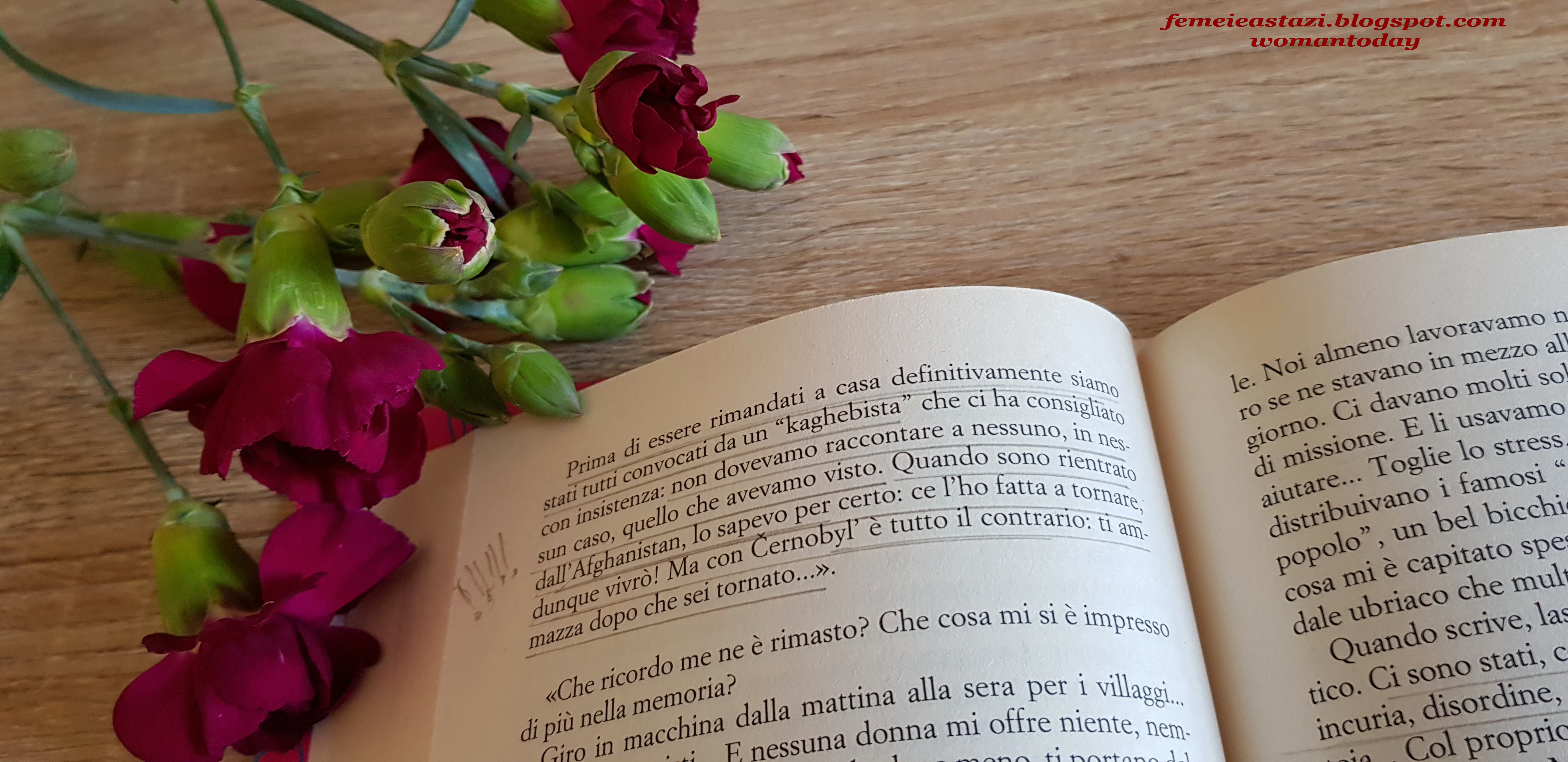
Svetlana Aleksievic riproduce fedelmente non solo i fatti narrati da queste persone, ma anche l’intensità del loro dolore, i colori della loro sofferenza, l’immensità della loro desolazione, il tormento dei loro rimpianti e delle loro domande. Alle voci di persone disperate che hanno scelto le terre di Cernobyl per scapare dalla guerra o dalla povertà e tentare di costruirsi una vita, si alternano le voci di scienziati che descrivono la fine che hanno fatto coloro che hanno dovuto intervenire per risolvere e limitare i danni dell’incidente in quanto quest’ultimi erano deceduti ormai da anni, di liquidatori invalidi o in fin di vita, ai tempi chiamati ad intervenire per ridurre il danno all’ambiente ed al pianeta, di loro parenti sopravvissuti, di professori e dottori che curano i loro figli. Mentre il rifiuto cociuto dei contadini di abbandonare la loro terra e dei nuovi immigrati di non insediarsi sulle terre evacuate, potrebbe far arrabbiare, infine risulta comprensibile viste le loro conoscenze di fisica. Per loro è inconcepibile come una cosa invisibile all’occhio nudo possa danneggiare la loro salute e addirittura ucciderli. Le voci dell’altra categoria di persone non lamentano il rifiuto ma bensì l’impossibilità di poter beneficiare di un tale privilegio e la mancanza d’informazioni che gli avrebbero condotti alla cautela. Il cordone centrale delle loro testimonianze riguarda la mancanza di comunicazioni, la manipolazione e quando esse non funzionavano, le intimidazioni, usate per far si che loro restassero e contribuissero a salvare il mondo. Ad impressionare e orripilare il lettore invece è l’indifferenza criminale con la quale queste persone erano inviate a svolgere il loro lavoro senza equipaggiamento adatto, mascherine di protezione, dosimetri funzionanti, terapie di prevenzione con iodio o accurata informazione. Lo scopo di tutto ciò era avere dei lavoratori che svolgessero questi lavori cruciali per l’umanità ma anche costruire e diffondere una propaganda che sminuisse la gravità del disastro e dipingesse l’immagine di un paese all’avanguardia capace di risolvere qualsiasi problema. Mentre il popolo veniva nutrito addirittura con il raccolto proveniente dalle terre vicine al reattore e con il latte e la carne degli animali che venivano eliminati, per via dell’ignoranza dei contadini che vendevano i prodotti ad estranei e delle macchinazioni delle categorie dirigenti, i “capi” che prendevano le pastiglie di iodio, avevano equipaggiamenti adatti e consumavano pasti provenienti da zone non contaminate. La distinzione fra le persone comuni che vedevano calpestare i loro diritti esistenziali e le figure del partito, sono notevoli e diventano più struggenti con ogni testimonianza. Alcune frasi pronunciate dai liquidatori intervistati rimarranno nella mia mente per sempre: “Ci hanno gettati laggiù come sabbia sul reattore”, “Quando sono rientrato dall’Afghanistan, lo sapevo per certo: ce l’ho fatta a tornare, dunque vivrò! Ma con Cernobyl è tutto il contrario: ti ammazza dopo che sei tornato…” (p.94) o “chiamava […] gli uomini «terra che parla»”(p.117). La situazione privilegiata dei dirigenti di partito viene descritta accuratamente dagli scienziati che hanno faticato inutilmente per convincerli ad adottare misure corrette per tutti. La conclusione dei loro racconti è la stessa in ogni caso: “per quelli che stanno in alto la gente è l’ultimo pensiero, temono solo per il proprio potere” (p.251), “i nostri dirigenti avevano più paura della collera dei propri superiori che dell’atomo” (p.252). Essere al di sopra del popolo crea la sensazione di potere: “smisurato potere di un uomo su un altro. Non è più solo un inganno, è una vera e propria guerra, una guerra contro gli innocenti…”(p.254) cosi tutto questo diventa storia, “la storia di un crimine” (p.253). E la storia viene costruita a piacimento grazie alla propaganda, una propaganda attentamente sorvegliata dal KGB che vieta di filmare o fotografare gli eventi in corso, sviando l’attenzione del mondo con scene costruite a tavolino come l’agricoltore sul trattore che legge un giornale di carattere comunista o il matrimonio organizzato sulla terra del Cernobyl per una coppia evacuata da tempo ma fatta tornare appositamente per questo. La scrittrice sceglie di far presente sin dall’inizio lo scopo della propaganda attraverso le parole di un giornalista: “Non dimentichi che abbiamo dei nemici. Abbiamo molti nemici al di là dell’oceano […] ecco perché da noi tutto va sempre bene, e non c’è niente che vada male.”

Il romanzo inizia e finisce con i racconti dolorosi di due mogli di vittime di Cernobyl. La prima, è la moglie del pompiere chiamato a spegnere quello che inizialmente sembrava un incendio alla centrale e se avete visto la serie televisiva, il film è stato abbastanza preciso. Non ha colto e trasmesso tutti i dettagli di un evento talmente tragico ma non vorrei rovinare la sorpresa di scoprirli personalmente nel caso vogliate leggere anche il romanzo quindi non aggiungo niente a questo punto. La seconda testimonianza invece, che ha ispirato anche il titolo del libro, almeno nella traduzione in italiano, è la testimonianza della moglie di un liquidatore, un uomo sposato con figli. Al momento della selezione per andare a Cernobyl e anche al ritorno, non erano al corrente dei rischi ai quali sarebbero stati esposti. Al ritorno, egli non raccontò molto di quello che aveva visto o sentito e quindi il calvario inizio con i compagni che iniziarono ad ammalarsi e morire entro i 3-4 anni da quando fossero rientrati a casa. Questa testimonianza è una prova di dedizione e amore incondizionato verso un marito moribondo e un figlio malato. Credo che con queste due storie l’autrice del romanzo ha voluto dare voce anche alla popolazione femminile apparentemente ignorata in questo disastro. Le donne, a meno che non si offrissero volontarie, non furono coinvolte nelle attività di liquidazione dell’incidente. Le loro figure vengono menzionate fra le testimonianze del personale medico, scientifico, didattico oppure semplicemente come le persone che hanno assistito gli uomini con attività di pulizie e quindi senza un’esposizione diretta alle radiazioni perciò il modo in cui questo disastro aveva toccato le loro vite, era incompleto. Essi hanno assistito gli uomini nella malattia, nel dolore e nella sofferenza facendo in modo che la morte sembrasse meno crudele e violenta. Essi hanno sofferto insieme ai loro uomini, sono morte interiormente insieme a loro e bisognava raccontare questo travaglio. Le loro voci dovevano essere ascoltate per comprendere a pieno la dimensione della sofferenza che un simile evento può causare.

Per concludere, io vorrei lasciarvi con le parole di un coro di bambini, bambini che nella loro innocenza accettano saggiamente la morte nonostante non capiscano perché devono morire…

“Moriremo e diventeremo scienza” diceva Andrej.

“Moriremo e ci dimenticheranno” pensava Katja.


“Quando morirò, non seppellitemi al cimitero, il cimitero mi fa paura, ci sono soltanto morti e cornacchie. “Seppellitemi nei campi…” aveva chiesto Oksana.


“Moriremo” piangeva Julja. Per me adesso il cielo è vivo… Quando lo guardo… loro sono là…» (p.272)


ENGLISH


Dear friends and readers,

Today I return with a literary review. The book I am talking about today is Prayer for Chernobyl by writer Svetlana Aleksievic, a journalist and writer of Belarusian and Ukrainian origins, winner of the Nobel Prize for literature. This book does not examine the events that led to the nuclear accident that took place in April 1986 at the Chernobyl nuclear power plant in the then Soviet Union and present day Ukraine but collects the testimonies of the survivors, of the people who lived in the contaminated areas, of the liquidators who had to limit the damage of radiation and their children, scientists who tried to limit the damage, soldiers called to oversee the closure of villages and the transfer of citizens, peasants who repopulated previously liberated villages, poor families or refugees of war who seeked peace and freedom in an abandoned land, of doctors and medical personnel who have treated the most diverse pathological consequences of the accident, teachers, directors of museums and institutes for nuclear energy, journalists and photographers who have had to cover the event and even an outspoken communist man blaming foreign states and their secret services for the accident without openly stating his name. The interviews were collected about 10 years after the disaster while the book was first published in 1997 in Minsk. In Italy the book was translated by Sergio Rapetti and published for the first time in 2002. The book inspired the television series Chernobyl with Jared Harris and Stellan Skarsgard.

Svetlana Aleksievic faithfully reproduces not only the facts narrated by these people, but also the intensity of their pain, the colors of their suffering, the immensity of their desolation, the torment of their regrets and their questions. To the voices of desperate people who have chosen the lands of Chernobyl to escape from war or poverty in order to build a life are alternated the voices of scientists describing the fate of those who had to intervene to solve and limit the damage of the accident as the latter had died years before, of invalid or dying liquidators, at the time called to intervene to reduce the damage to the environment and the planet, to their surviving relatives, to professors and doctors who were treating their children. While the stubborn refusal of peasants to abandon their land and of new immigrants not to settle on the evacuated lands may anger the reader, finally it is understandable given their little knowledge of physics. For them it is inconceivable how something invisible to the naked eye can damage their health and even kill them. The voices of the other category of people do not complain about the refusal but rather the impossibility of being able to benefit from such a privilege and the lack of information that would have led them to be cautious. The central cord of their testimonies concerns the lack of communication, the manipulation and when all this did not work, the intimidation, used to make them stay and help save the world. What impresses and horrifies the reader, on the other hand, is the criminal indifference with which these people were sent to carry out their work without suitable equipment, protective masks, working dosimeters, preventive therapies with iodine or accurate information. The purpose of all this was to have workers who carry out these crucial jobs for humanity but also to build and disseminate propaganda that diminished the severity of the disaster and painted the image of a magnificent country, capable of solving any problem. While the people were actually fed the harvest coming from the lands near the reactor and the milk and meat of the animals that were eliminated, due to the ignorance of the farmers who sold the products to strangers and the machinations of the ruling categories, the " leaders ”who took the iodine tablets, had suitable equipment and ate meals from uncontaminated areas. The distinction between ordinary people who saw their existential rights trampled on and party figures, is remarkable and becomes more obvious with each testimony. Some phrases spoken by the liquidators interviewed will remain in my mind forever: "They threw us down there like sand on the reactor", "When I returned from Afghanistan, I knew for sure: I made it back, so I'll live! But with Chernobyl it is quite the opposite: he kills you after you come back ... "(p.94) or" he called [...] people "speaking land" (p.117). The privileged situation of party leaders is accurately described by scientists who have worked in vain to persuade them to take measures that are correct for all. The conclusion of their stories is the same in any case: "for those who stand above, people are the last thought, they fear only for their own power" (p.251), "our leaders were more afraid of the anger of the one's superiors than of the atom ”(p.252). Being above the people creates the feeling of power: “one man's immeasurable power over another. It is no longer just a deception, it is a real war, a war against the innocent… ”(p.254) so ​​all this becomes history,“ the story of a crime ”(p.253). And the story is built at will thanks to propaganda, a propaganda closely guarded by the KGB that prohibits filming or photographing the events in progress, diverting the attention of the world with scenes built at the table like the farmer on the tractor reading a newspaper. Communist character or the wedding organized on the land of Chernobyl for a couple evacuated for some time but returned specifically for this. The writer chooses to point out the purpose of propaganda from the beginning through the words of a journalist: "Don't forget that we have enemies. We have many enemies across the ocean [...] that's why everything is always good with us, and nothing could go wrong. " 

The novel begins and ends with the painful tales of two wives of Chernobyl victims. The first is the wife of the firefighter called to put out what initially looked like a fire at the plant and if you have seen the television series, the film was quite accurate. He has not grasped and transmitted all the details of such a tragic event but I would not want to spoil the surprise of discovering them personally in case you want to read the novel too so I will not add anything at this point. The second testimony, on the other hand, which also inspired the title of the book, at least in the Italian translation, is the testimony of the wife of a liquidator, a married man with children. At the time of the selection to go to Chernobyl and also to return, they were not aware of the risks to which they would be exposed. Upon returning, he did not tell much about what he had seen or heard and therefore the ordeal began with the companions who began to get sick and die within 3-4 years of returning home.

This testimony is proof of dedication and unconditional love for a dying husband and a sick child. I believe that with these two stories the author of the novel also wanted to give a voice to the apparently ignored female population in this disaster. The women, unless they volunteered, were not involved in the settlement of the accident. Their figures are mentioned among the testimonies of medical, scientific, educational staff or simply as the people who assisted men with cleaning activities and therefore without direct exposure to radiation therefore the way in which this disaster had affected their lives, it was incomplete. They assisted men in sickness, pain and suffering by making death seem less cruel and violent. They suffered together with their men, they died inwardly with them and it was necessary to tell about this travail. Their voices had to be heard to fully understand the dimension of suffering that such an event can cause.

To conclude, I would like to leave you with the words of a choir of children, children who in their innocence wisely accept death despite not understanding why they had to die ...

“We will die and become science” said Andrei.

“We will die and they will forget us” Katja thought.

“When I die, don't bury me in the cemetery, the cemetery scares me, there are only dead and crows. "Bury me in the fields ..." Oksana asked.

“We will die” Julja cried. For me now the sky is alive ... When I look at it ... they are there ... "(p.272)


IT: Per realizzare questa recensione secondo la regolamentazione del fair use, ho letto il libro Preghiera per Cernobyl di Svetlana Aleksievic, editore E/O, collana Le cicogne, 2018, EAN 9788866329572


EN: To carry out this review according to the fair use regulation, I read in Italian the book Prayer for Chernobyl by Svetlana Aleksievic, publisher E / O, Le cicogne series, 2018, EAN 9788866329572


Disclaimer e premesse / Disclaimer and premises

IT:Questo post non ha scopi commerciali e non incoraggia vendite, denominazioni, immagini ed eventuali link presenti sono solo a scopo informativo. Le immagini ritraggono un prodotto acquistato regolarmente che ho valutato in quanto consumatore. Questo post è di mia completa creazione per quanto riguarda contenuti, foto e idee espresse. Prima di usare qualsiasi parte di questo post siete pregati di contattarmi e nel caso vi abbia ispirato per altre creazioni, vi chiedo cortesemente di menzionare la fonte.

ENG: This post has no commercial purposes and does not encourage sales, names, pictures and eventual links are present only for an informative purpose. The opinions expressed represent my experience as a consumer. This post is of my entire creation as for contents, photos and expressed ideas. Before using any part of it, you need to contact me and in case it inspired you for other creations, I gently ask you to mention the source.


Recommended post

Solo Cose Belle ottobre 2024 parte 1 / Only Beautiful Things October 2024 part 1

ITALIANO   Ciao carissimi amici,  Finalmente riesco a scrivere il post in merito alle cose belle che ho vissuto durante il mese corrente e s...