Carissimi
lettori,
Oggi sono qui per
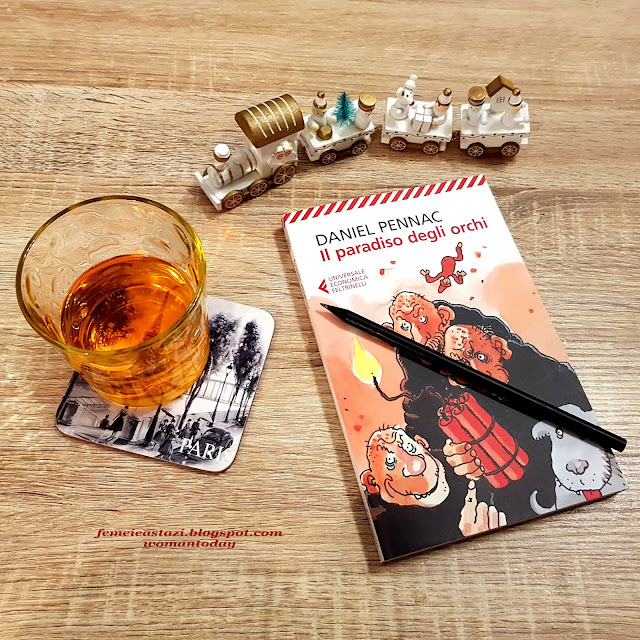
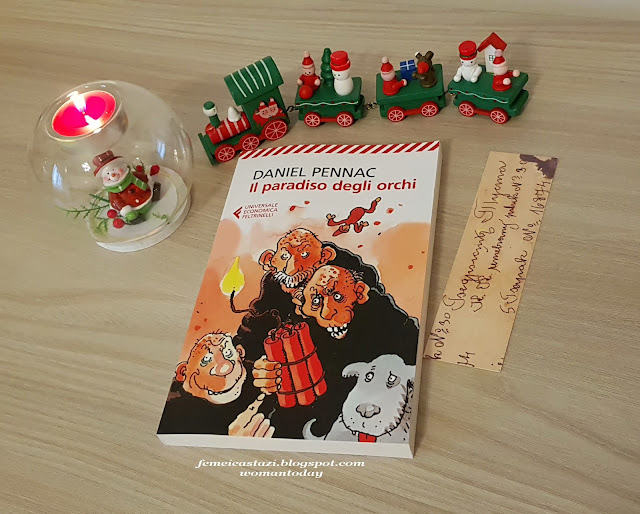
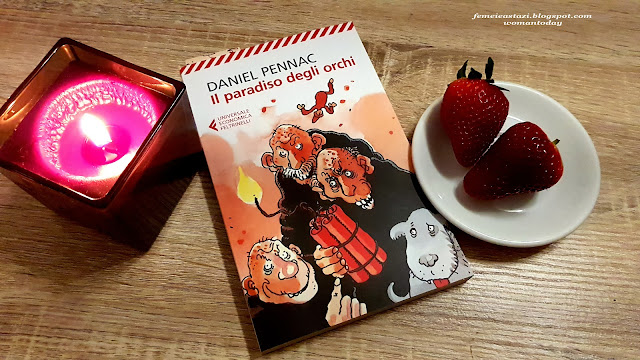
recensire il romanzo Il paradiso degli orchi dello scrittore francese Daniel
Pennac. Questo libro è il primo romanzo del ciclo Malaussène che vede come
personaggio principale Benjamin Malaussène e la sua famiglia caricaturale, una
famiglia senza padre e madre ma composta solo da fratelli di madre. La famiglia
abita a Parigi, nel quartiere Belleville, in un ambiente multietnico, accanto
ad un ristorante arabo. L’unica madre che i bambini della famiglia Malaussène
conoscono è la signora Yasmina che gestisce il ristorante e che in più
occasioni ha provveduto al loro nutrimento mentre la madre naturale, è uno
spirito libero, perennemente innamorata dell’uomo sbagliato, mai a casa se non
per lasciare un altro fratellino alle cure di suo figlio maggiore Benjamin. È
infatti Benjamin ad occuparsi del sostentamento della sua famiglia di fratelli
e a provvedere alle loro necessità e ai loro desideri. La famiglia è composta
da Benjamin, il fratello maggiore, designato da sua madre per occuparsi di tutti
gli altri, Louna, la seconda, appena maggiorenne e incinta a sua volta, che
nonostante non viva più insieme ai suoi fratelli, gli visita molto spesso,
Clara, una dolcissima ragazza adolescente innamorata della sua macchina
fotografica, Thèrese, una ragazza strana con doti di vegente e sensitiva,
Jérémy, un ragazzino pestifero ma geniale, il Piccolo, un dolcissimo ragazzino
strabico che nonostante le sue visioni e i suoi incubi sugli orchi, non è mai
sazio di ascoltare le fiabe che suo fratello Benjamin narra e Julius, il cane
epilettico, fedele da anni alla famiglia. Il lavoro che Benjamin fa al Grande
Magazzino (terminologia volutamente vaga che potrebbe benissimo rappresentare
qualsiasi grande multinazionale di consumo), gli permette di provvedere alla famiglia.
Nonostante avesse una laurea in legge, di professione Benjamin fa il capro
espiatorio, cioè subisce le umiliazioni del suo responsabile affinché i clienti
venuti a reclamare un danno o malfunzionamento di un oggetto acquistato nel
Grande Magazzino, s’impietosiscano e rinuncino al risarcimento. Per questo
lavoro, Benjamin viene pagato molto bene e quando le viene chiesto quale fosse
la sua filosofia per svolgere un lavoro tanto ignobile, la sua risposta è: “la
filosofia dello stipendio succoso”. Il suo lavoro lo trasforma in un
personaggio principale in una serie di attentati con bombe, attentati che non
solo segneranno il suo futuro, ma diventeranno anche argomento principale per
le fiabe che lui racconterà a casa ai suoi fratelli al posto della ninna nanna.
Fiabe con orchi che fanno saltare in aria la gente e poliziotti che indagano
per acchiappare il colpevole. Sono proprio queste fiabe, talmente ben costruite
e intriganti che determineranno alcuni membri della famiglia a cercare di
trovare il colpevole. Alla fine la soluzione di questo caso diventa un chiodo
fisso per Benjamin e cambierà definitivamente il suo futuro.
Altri personaggi
che popolano questo romanzo sono: Julie, una giornalista cleptomane, designata
da Benjamin con l’appellativo “zia Julia”, Theo, collega omosessuale del nostro
protagonista che copre un ruolo importante nella soluzione del caso dei
bombardamenti, Stojil, la guardia serba sempre pronta a raccontare una storia
sulla seconda guerra mondiale, il commissario Rabdomant e l’ispettore Caregga,
i rappresentanti delle forze dell’ordine chiamati a risolvere il mistero delle
bombe nel Grande Magazzino. Tutti i personaggi del romanzo sono costruiti con
ironia, irriverenza, sarcasmo e fervida immaginazione sul modello che i grandi
scrittori cominciando da Molière al moderno Dany Boon hanno reso caratteristico
nella commedia francese.
Questo romanzo ha
una nota allegorica molto marcata ma è allo stesso tempo disseminato di
riferimenti a momenti importanti della storia, di concetti rilevanti e spunti
di riflessione validi. Chiunque possa ritrovarsi nella situazione dei nostri
personaggi perché a chiunque è capitato di ritrovarsi sommerso di debiti,
prigioniero in una situazione senza uscita, accettare un lavoro solo per la
paga o vedersi calpestato l’orgoglio e dissiparsi i sogni. Il Paradiso degli
Orchi è scritto con acuta ironia e fine sarcasmo, che paradossalmente fa
divertire in quanto non è una elegia all’amarezza ma la scoperta che “succede
anche ad altri”. Per questo motivo, il paradiso degli orchi piacerà a chiunque
lo prenderà in mano. Con la sua narrazione scorrevole, le pause per inserire le
riflessioni personali del narratore e l’assenza di riferimenti di carattere
moralistico nonostante gli eventi descritti, questo romanzo è una vera goduria
per i divoratori di letteratura. Come commento finale per la mia recensione
posso solo dire: “Enjoy!”.
ENGLISH
Dear readers,
Today I'm here to review the novel Au bonheur des ogres by the French writer Daniel Pennac. This book is the first novel of the Malaussène cycle that sees Benjamin Malaussène as the main character and his caricatured family, a family without father and mother but composed only of siblings from the maternal line. The family lives in Paris, in the Belleville district, in a multi-ethnic environment, next to an Arab restaurant. The only mother that the children of the Malaussène family know is Mrs. Yasmina who runs the restaurant and who has provided their nourishment on several occasions while the real mother is a free spirit, perpetually in love with the wrong man, never at home if not to leave another little brother in the care of his eldest son Benjamin. Indeed, it is Benjamin who looks after his siblings' family and provides for their needs and desires. The family is made up of Benjamin, the elder brother, designated by his mother to take care of all the others, Louna, the second child, just of age and pregnant herself, who despite no longer living with her brothers, visits them very often. Clara, a sweet teenage girl in love with her camera, Thèrese, a strange girl with psychic skills, Jérémy, a pestiferous but brilliant little boy, the Little One, a sweet cross-eyed boy who despite his visions and his nightmares about orcs, has never enough of listening to the fairy tales that his brother Benjamin tells them and Julius, the epileptic dog, loyal to this family for years. The work Benjamin does at the Department Store (deliberately vague terminology that could very well represent any large consumer multinational), allows him to provide for the family. Despite having a degree in law, Benjamin is a scapegoat by profession, that is, he suffers the humiliations of his manager so that customers who come to claim damage or malfunction of an item purchased in the Department Store, take pity and waive compensation. For this job, Benjamin is paid very well and when asked what his philosophy was for doing such an ignoble job, his answer is: "the philosophy of the juicy salary". His work transforms him into a main character in a series of bomb attacks, attacks that will not only mark his future, but also become the main topic for the fairy tales he will tell his brothers at home instead of the lullaby. Fairy tales with orcs blowing up people and policemen investigating to catch the culprit. It is precisely these fairy tales, so well designed and intriguing that they will cause some family members to try to find the delinquent. Eventually the solution to this case becomes an obsession for Benjamin and it will definitely change his future.
Other characters that populate this novel are: Julie, a kleptomaniac
journalist, designated by Benjamin with the nickname "Aunt Julia",
Theo, a homosexual colleague of our protagonist who plays an important role in
solving the bombing case, Stojil, the Serb guard always ready to tell a story
about the Second World War, Commissary Rabdomant and Inspector Caregga, law
enforcement representatives called to solve the mystery of the bombs in the
Department Store. All the characters of the novel are created with irony,
irreverence, sarcasm and fervent imagination on the model that the great
writers starting from Molière to the modern Dany Boon have made characteristic
in French comedy.
This novel has a very marked allegorical note but is at the
same time littered with references to important moments in history, with
relevant concepts and valid food for thought. Anyone can find themselves in the
situation of our characters because anyone who has happened to find themselves
inundated with debts, a prisoner in a dead-end situation, accepting a job only
for pay or having pride trampled on and dreams dissipated. Au bonheur des ogres is written with acute irony and fine sarcasm, which paradoxically is
entertaining as it is not an elegy to bitterness but the discovery that
"it also happens to others". For this reason, the orc paradise will
appeal to anyone who takes it in hand. With its smooth narrative, the pauses to
insert the narrator's personal reflections and the absence of moralistic
references despite the events described, this novel is a real pleasure for
lovers of literature. As a final comment for my review I can only say:
“Enjoy!”.
Disclaimer e premesse / Disclaimer and premises
IT:Questo post non ha scopi commerciali e non incoraggia vendite, denominazioni, immagini ed eventuali link presenti sono solo a scopo informativo. Le immagini ritraggono un prodotto acquistato regolarmente che ho valutato in quanto consumatore e lettore. Questo post è di mia completa creazione per quanto riguarda contenuti, foto e idee espresse. Prima di usare qualsiasi parte di questo post siete pregati di contattarmi e nel caso vi abbia ispirato per altre creazioni, vi chiedo cortesemente di menzionare la fonte.
ENG: This post has no commercial purposes and does not encourage sales, names, pictures and eventual links are present only for an informative purpose. The images depict a regularly purchased product that I have evaluated as a consumer and reader.This post is of my entire creation as for contents, photos and expressed ideas. Before using any part of it, you need to contact me and in case it inspired you for other creations, I gently ask you to mention the source.


