Visualizzazione post con etichetta history. Mostra tutti i post

martedì 26 settembre 2023

Weekend al cinema / Weekend at the cinema


IT: Una volta finito il periodo di "clausura" per malattia, anche se non stessi per niente bene, ho deciso che prima di buttarmi nelle fiame del lavoro e della vita quotidiana🔥 per ritrovare il gusto di vivere, avrei dovuto godermi qualche uscita al cinema. Ecco come in due giorni sono riuscita a vedere ben tre film, certo il fatto che il costo di alcuni biglietti sia 3,50 e che al pomeriggio presto i posti di parcheggio disabili sono ancora liberi (non che solitamente fossero occupati da portatori di handicap) ha aiutato molto. E visto che trovi finalmente posto di parcheggio, cosa fai, te ne vai? Nooo, resti a vedere un secondo film e la volta dopo ne scegli uno che duri tanto da far valere la soddisfazione di aver occupato quel posto con un tagliando regolare. 

ENG: Once the period of "seclusion" due to illness was over, even if I wasn't well at all, I decided that before throwing myself into the flames of work and everyday landatain order to rediscover the joy of living, I could enjoy a few trips to the cinema.  This is how in two days I managed to see three films, certainly the fact that the cost of some tickets is 3.50 and that in the early afternoon the disabled parking spaces are still vacant (not that they were usually occupied by disabled people), it helped a lot.  And since you finally find a parking space, what do you do, do you leave?  Nooo, you stay to see a second movie and the next time you choose one that lasts long enough to make the satisfaction of having occupied that place with a regular perment worth while.

IT: Dopo questa piccola parentesi introduttiva (sarcastica, ironica ed amareggiata), vi parlerò dei film visti. 
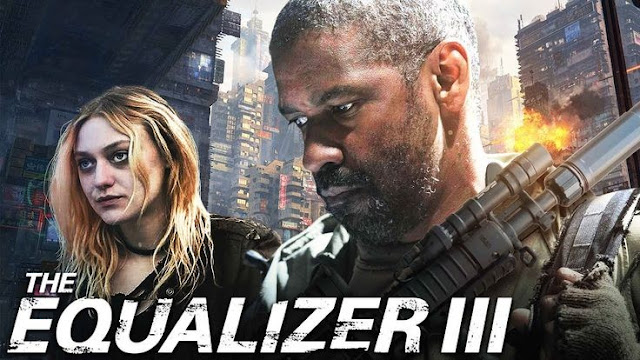
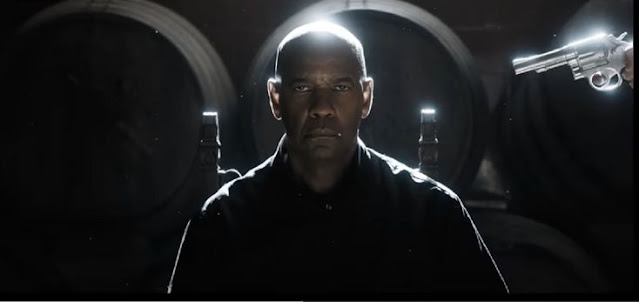
Come grande ammiratrice di Denzel Washington, sono andata a vedere Equalizer 3 e sono stata realmente contenta della mia scelta. L'azione si svolge in Italia, iniziando con la Sicilia e salendo piano, piano fino a Napoli e la costiera Amalfitana. Stavolta Robert McCall (l'ex agente C.I.A al quale il vecchio Denzel ha dato vita), combatte la mafia italiana, una trama abbastanza stereotipata ma che funziona benissimo. I dialoghi italiani erano eletrizzanti, gli attori pure, e non parlo solo di Dakota Fanning che confesso, cominciava a mancarmi, ma anche di giovane promesse italiane come Gaia Scodellaro e Andrea Dodero e l'ambientazione era il meglio del meglio, curata nei più minimi dettagli. Il film è riuscito a catturare per bene le abitudini del popolo italiano, la loro generosità, il desiderio di fidarsi del prossimo e l'intrasigenza davanti ai cambiamenti e l'Hollywood ha saputo sfruttare al massimo tutto questo per realizzare, a mio avviso, il miglior Equalizer finora. È anche il più sanguinoso di tutti ma come l'italiano che veste con stile qualsiasi indumento, anche questo film usa la violenza con il pennello di un grande maestro. 
Chi sa se ce sarà un'altro sequel visto che Denzel Washington aveva dichiarato che questo sarebbe stata l'ultima volta in cui avrebbe imperssonato il famoso giustiziere. Forse, visto che il regista, Antoine Fuqua vuole fare un'origin story, vedremo presto qualc'un altro nei panni di un giovane agente che impara a uccidere senza pietà  Voi avete visto Equalizer 3? Vi è piaciuto? Se lo dovessi valutare con un voto e considerando che Denzel è uno dei miei attori preferiti, per me questo film si merita un -8.

ENG: After this small introductory parenthesis (sarcastic, ironic and embittered), I will talk to you about the movies I've seen.
 As a huge fan of Denzel Washington, I went to see Equalizer 3 and was really happy with my choice.  The action takes place in Italy, starting with Sicily and moving slowly up to Naples and the Amalfi coast.  This time Robert McCall (the former CIA agent whom the old Denzel gave life to) fights the Italian mafia, a fairly stereotyped plot but that works very well.  The Italian dialogues were electrifying, the actors too, and I'm not just talking about Dakota Fanning, who I confess, I was starting to miss, but also about young Italian promises like Gaia Scodellaro and Andrea Dodero and the setting was the best of the best, with attention to the smallest details.
The movie managed to capture well the habits of the Italian people, their generosity, the desire to trust others and the intransigence in the face of changes and Hollywood was able to make the most of all this to achieve, in my opinion, the best Equalizer so far. It is also the bloodiest of all but like the Italian who dresses any garment with style, this film also uses violence with the brush of a great master.
Who knows if there will be another sequel given that Denzel Washington had declared that this would be the last time he would play the famous vigilante. Maybe, since the director, Antoine Fuqua wants to make an origin story, we will soon see someone else in the role of a young agent who learns to kill without mercy. If I had to rate it with a grade and considering that Denzel is one of my favorite actors, for me this film deserves a -8.
Have you seen Equalizer 3? Did you like it?


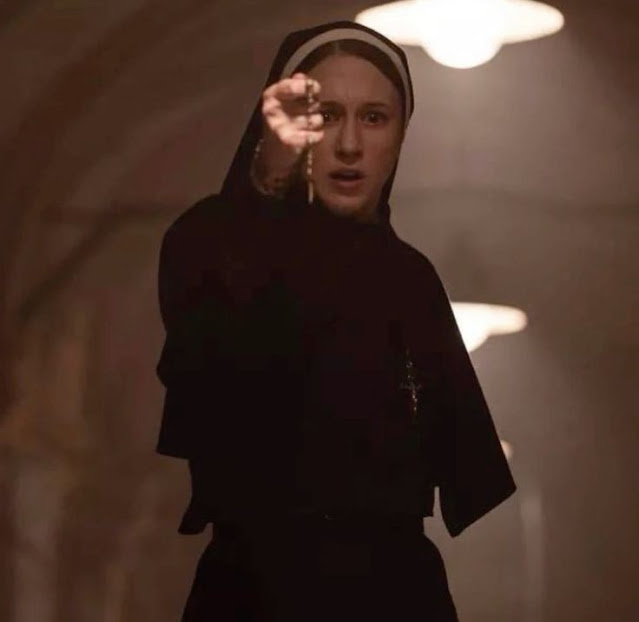
IT: Andiamo con ordine e visto che vi avevo già detto che avevamo visto due film nella stessa giornata, aggiungo che dopo Equalizer 3, avevamo deciso di andare a vedere The Nun 2. Un'altro sequel mi direte, beh, noi siamo cosi, abbiamo le nostre saghe e i nostri blockbuster che non possiamo non vedere al cinema. Quindi un sequel della famiglia Conjuring sulla più famosa suora demonio non poteva passare inosservato. Questo film riprende da dove è finito il primo e abbiamo ancora Taissa Farmiga e Jonas Bloquet come personaggi principali. Come vi ricorderete nel caso abbiate visto il primo film della saga, il demone Valak non è stato ucciso nel monastero Santa Carta perché una piccola parte di sé è sopravvissuta nascosta in Maurice, "il Francese" e stavolta a darle la caccia è sorella Irene, divenuta suora nel frattempo aiutata anche ella da una novizia, nei panni di suor Debra, una giovane fanciulla con un passato ingiusto e turbolento. Su internet avevo letto che questo film era più debole e meno bello rispetto al primo film della saga ma secondo il mio parere è tutto il contrario. Secondo me, in questo film hanno migliorato alcuni aspetti che nel primo lasciavano un po' da desiderare e gli attori sembravano più preparati e convincenti, qualcosa del tipo, "repetitia docet" o simile. Comunque, dopo altre leggende infrante e miti distorti, The Nun II arriva a consegnare la giusta quantità di brividi senza esagerare o annoiare. Se siete amanti dei film dell'orrore noterete sicuramente e apprezzerete la differenza perché altrimenti non mi sento di consigliare questo film. Meglio del primo e per me un ben meritato 6.

ENG: Let's go in order and since I had already told you that we had seen two films on the same day, I add that after Equalizer 3, we had decided to go and see The Nun 2. Another sequel you will tell me, well, we are like that, we have our sagas and our blockbusters that we cannot miss seeing at the cinema.  So a Conjuring family sequel about the most famous demon nun could not go unnoticed.  This movie picks up where the first one ended and we still have Taissa Farmiga and Jonas Bloquet as the main characters.  As you will remember if you have seen the first film of the saga, the demon Valak was not killed in the Santa Carta monastery because a small part of him survived hidden in Maurice, "the Frenchman" and this time it is sister Irene who is hunting it, having become a nun in the meantime, also helped by a novice, in the role of Sister Debra, a young girl with an injust and turbulent past. I had read on the internet that this movie was scarcer and less interesting than the first one in the saga but in my opinion it is quite the opposite.  In my opinion, in this film they improved some aspects that in the first one left a little to be desired and the actors seemed more prepared and convincing, probably due to, "repetitia docet" or something of sort.  However, after other broken legends and distorted myths, The Nun II manages to deliver just the right amount of thrills without overdoing or boring.  If you are a lover of horror movies you will definitely notice and appreciate the difference because otherwise I would not recommend this film to you.  Better than the first one and for me a well deserved 6.


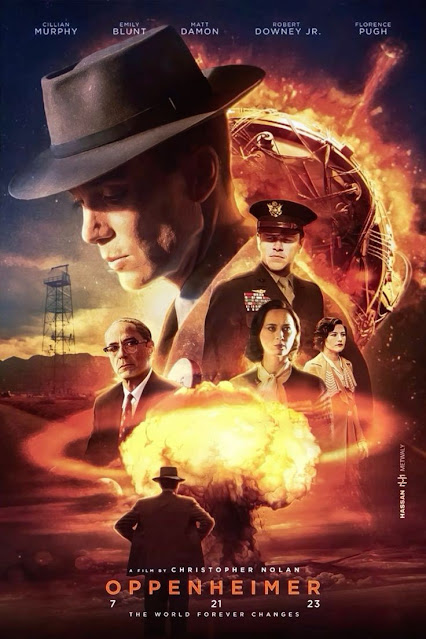
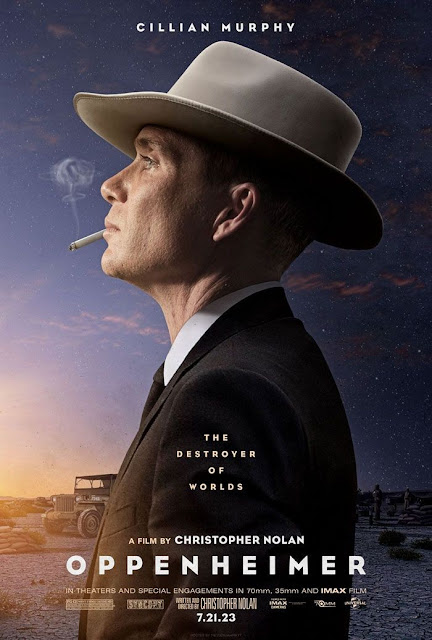
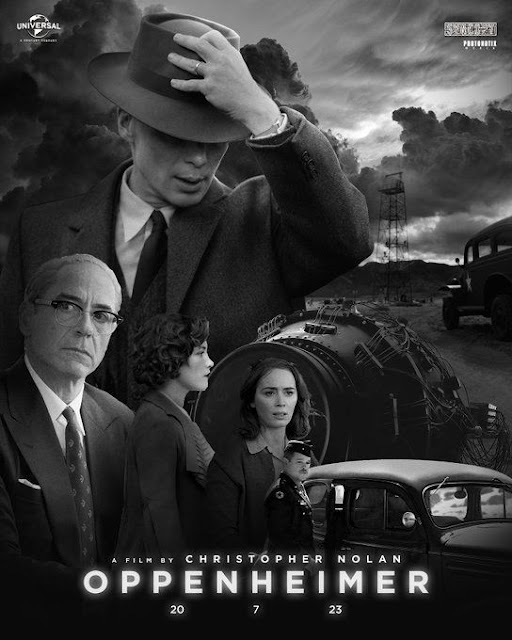
IT: Dopo questo slalom fra film pensati per risvegliare i sensi e mettere in moto l'adrenalina, arriviamo al re dei film appena visti, un film che non risveglia solo emozioni e reazioni fisiche ma un film che ti coinvolge intellettualmente e moralmente, un film che non aspettava altro che essere guardato per diventare quello che realmente è, cioè una capodopera artistica. Il film in questione è Oppenheimer e ciò che fa di lui una vera opera d'arte non è solo il cast stellare che comprende nomi come Cilian Murphy, Robert Downey Jr, Emily Blunt, Matt Damon, Josh Hartnett e tantissimi altri ma anche la storia che si sviluppa grazie a riprese concise, dialoghi furbi, colpi di scena e svolte inaspettate in un evento che segnò per sempre il destino di tutta l'umanità, la costruzione della prima bomba atomica. Ciliam Murphy recita la parte di J. Robert Oppenheimer, un fisico ebreo, padre della bomba atomica, mentre Robert Downey Jr recita la parte del suo antagonista, il politico senza scrupoli e senza rimorsi. Quello che all'inizio sembrava il nascere di una grande amicizia, evolve in modo subdolo come un tumore nella più grande controversia che il mondo scientifico abbia mai conosciuto e seguire gli eventi che portarono a tutto questo è una vera delizia. 
Se volete vedere i vostri attori preferiti recitare nei ruoli più diversi e inconsueti che abbiate mai immaginato, andate a vedere questo film, sicuramente non resterete delusi. Non sento di aver spoilerato niente in quanto la storia la sappiamo tutti ma nessuno avrebbe immaginato queste dinamiche e questi giochi d'intenti prima di vedere questo film. Non avete possibilità di andare al cinema? Allora noleggiatelo appena disponibile sullo streaming online e vi assicuro, non vi pentirete, in quanto non ci sono mai stati soldi spesi meglio per un film. Per me, qui parliamo di un 10 e lode. 

ENG: After this slalom between movies designed to awaken the senses and set the adrenaline in motion, we arrive at the king of the films we have just seen, a film that not only awakens emotions and physical reactions but a movie that involves you intellectually and morally, a production that didn't await for anything else than to be seen so to become what it really is, that is, an artistic masterpiece. The film in question is Oppenheimer and what makes it a true work of art is not only the stellar cast which includes names like Cilian Murphy, Robert Downey Jr, Emily Blunt, Matt Damon, Josh Hartnett and many others but also the story developed thanks to concise shots, clever dialogues, twists and unexpected turns in an event that forever marked the fate of all humanity, the construction of the first atomic bomb. Ciliam Murphy plays the part of J. Robert Oppenheimer, a Jewish physicist, father of the atomic bomb, while Robert Downey Jr plays the part of his antagonist, the unscrupulous and remorseless politician.  What initially seemed like the birth of a great friendship evolves as subtly as a tumor into the greatest controversy the scientific world has ever known, and following the events that led to it, is a true delight.
 If you want to see your favorite actors play the most different and unusual roles you have ever imagined, go and see this film, you definitely won't be disappointed. I don't feel like I've spoiled anything as we all know the story but no one would have imagined these dynamics and these games of intent before seeing this film.  Don't have a chance to go to the cinema?  Then rent it as soon as it is available on online streaming and I assure you, you will not regret it, as there has never been money better spent on a film.  For me, here we are talking about a full marks 10.


Credits photos Pinterest
All the rest ©️ Femeie Astazi / Woman Today / Florentina Andrei 

martedì 15 gennaio 2019

Il film The Nun visto e spiegato da una rumena / The movie The Nun seen and explained by a Romanian


Ciao carissimi lettori,
A dire la verità, non pensavo di scrivere questo post, anzi non era nemmeno in programma un post del genere ma visto che sono riuscita a visionare un film che non molto tempo fa era al cinema e che deve ancora arrivare in televisione, ho pensato di condividere con voi alcune curiosità. Recentemente ho scoperto il film THE NUN - la vocazione del male su Sky in Prima Fila e visto che ci volevo da tanto vederlo non riuscendo purtroppo a vederlo al cinema, ho deciso di noleggiarlo in Prima Fila. Il mi post non intende assolutamente pubblicizzare Sky, le sue promozioni e ancor meno la Prima Fila ma semplicemente condividere con voi dei particolari di cui una persona qualsiasi potrebbe non venire a conoscenza. Prima di tutto devo informarvi che sono una fan della saga Conjuring e ho visto tutti i film diverse volte e quindi appena ho saputo che il film THE NUN era incentrato su una storia del orrore che si sviluppava in Romania, ho capito che dovevo vederlo. Volevo vederlo perché da rumena che sono, ero sempre delusa del modo superficiale, approssimativo e talvolta completamente errato in cui la cultura, storia e tradizioni rumene erano rappresentate sul grande o piccolo schermo. Ecco quindi che in questo articolo non intendo solo fornirvi delle piccole informazioni sui posti ma anche condividere con voi il mio parere e la mia conoscenza da rumena su quello che potete vedere in questo film. La storia è incentrata su un caso di possessione demoniaca accaduto nell'abbazia S. Carta che molto probabilmente sta per il monastero Cârța, un monastero del XIII secolo vicino la più rinomata città Sibiu, ma il film non è stato girato lì. Tranne per qualche filmato dell'entrata del monastero, il film è stato girato nel Castello dei Corvino, in rumeno chiamato Castello Corvinilor o Castello Huniazilor dal nome della famiglia che lo edifico e ci visse dentro. Il Castello si trova a Hunedoara, una delle più belle città della Romania, nella famosa zona Transilvania. Il castello fu eretto nel XIV secolo in stile gotico con qualche aggiunta in stile rinascimentale fatta negli anni a seguire. Gli esterni sono quelli del castello e anche alcuni interni ma la maggior parte delle sale che vediamo nel film, non esistono veramente nel castello. So che su Wikipedia in lingua italiana possiamo leggere che il famoso condottiero e sovrano del Paese Rumeno, Vlad Tepes o Vlad III fu tenuto prigioniero lì dal suo ex alleato Mattia Corvin ma questa informazione è completamente falsa. Prima di tutto chiariamo alcune cose importanti che riguardano Vlad Tepes, il suo castello non era il famoso Castello Bran ma Il castello di Targoviste che sfortunatamente adesso è solo una rovina, Mattia Corvin ha tenuto prigioniero Vlad Tepes per 12 anni a Visegrad e per altri 2 a Buda in Ungheria e in nessun caso nel castello Corvinilor dove i suoi alleati lo avrebbero potuto liberare senza grandi sforzi e per quanto riguarda il sopranome Dracula e l'impalatore, vi posso dire che Dracula è una grande inesattezza perché fu il padre di Vlad Tepes, Vlad II a essere soprannominato Dracul perché faceva parte del ordine del Drago, un ordine militare e religioso simile a quello dei Cavalieri di Malta o Cavalieri Teutonici. Vlad II aveva molto spesso attaccato le città del suo paese e aveva tradito la fiducia dei suoi alleati e del suo popolo il che creò una certa antipatia. Vlad III, al contrario di suo padre, fu rispettato e onorato dal suo popolo e lo è tuttora perché l'atto d'impallare le persone era rivolto verso i tanti invasori, soprattutto ottomani, che cercavano di occupare il suo paese, verso i traditori, i ladri e i fannulloni e per quello che succedeva a quei tempi, non era nemmeno un atto tanto crudele e insolito. Io mi ricordo una leggenda che viene ancora narrata dai nostri genitori e nonni che dice che durante il suo regno, nessuno rubava niente e si poteva tranquillamente lasciare incustodita una borsa con oro e quando quella borsa sparì, la gente seppe che Vlad Tepes fu ucciso. 
Dopo aver fatto tutte queste precisazioni posso affermare che probabilmente il demone descritto nel film come il marchese dei serpenti è stato creato partendo dalle informazioni sbagliate che la gente ha a livello internazionale su Vlad III. 
Per quanto riguarda la tradizione dei rumeni di sputare quando viene nominato il male posso confermare che esiste, anche se è stata descritta in modo approssimativo. Con sputare non s'intende l'espettorare di muco ma l'atto simbolico di riprodurre il gesto e il suono due volte senza però eliminare niente e accompagnato dalla frase onomatopea "ptiu' ptiu'".
L'abitudine dei campanelli nelle tombe non esiste o almeno io non ne ho mai visto una tomba che ne avesse uno, si usava però nei decenni e secoli scorsi di scavare le tombe dopo 7 anni e spostare le ossa in una borsa e nel caso in cui il cadavere era ancora integro, infilzare il cuore con un ago se non era già stato fatto prima della sepoltura per evitare che costui diventi un vampiro o STRIGOI, come viene chiamato più comunemente da noi. Questa tradizione era comune nelle zone rurali dove la superstizione era un modo per affrontare i problemi della vita. 
Un altra piccola inesattezza riguarda il nome del demonio, VALAK, che dovrebbe ricordare il territorio rumeno Valacchia o Paese Rumeno di cui era sovrano Vlad III, collocandolo però in Transilvania, che a quei tempi era uno stato diverso. Il marchese Carta (per niente un nome rumeno), non avrebbe invocato un demonio straniero :P per poi venire sconfitto e cacciato all'inferno dai cavalieri cristiani. 
Nel 1952, l'anno in cui viene collocata la storia, esisteva già la Romania di oggi ma il regime comunista era ormai saldo e non vedeva molto bene e non accettava facilmente la presenza di stranieri che non fossero cittadini di altri paesi comunisti al interno del paese quindi la presenza di un franco-canadese era molto improbabile.
Un altra piccola curiosità, le scene al Vaticano che si possono vedere all'inizio del film sono state in realtà girate al Palazzo del Parlamento, a Bucarest, uno dei monumenti più significativi costruiti dai comunisti, conosciuto a quei tempi come la Casa del Popolo e che in questo momento ospita il Parlamento e i suoi legislatori.
Tutto sommato, senza fare uno spoiler, posso dire che questo film è comunque più esatto della maggior parte dei film realizzati sulla storia rumena e i personaggi rumeni, è abbastanza terrificante e la storia del film, anche se completamente inventata, risulta molto intrigante. Ho apprezzato particolarmente la recitazione di Taissa Farmiga che segue i passi della sorella, Vera Farmiga e mostra il talento con cui è dotata la sua famiglia. 
Presumo che leggere questo post può essere utile a chi deve ancora vedere il film ma anche a chi lo ha già visto e vorrebbe avere qualche chiarimento in merito. Io vi ringrazio per la visita, spero che abbiate trovato interessante il mio post e vi lascio ammirare le foto del Castello dei Corvino che ho visitato quasi una decina di anni fa. 


ENGLISH

Hello dear readers,
To tell the truth, I did not plan to write this post, indeed it was not even scheduled a similar post but since I managed to view a film that was not so long ago at the cinema and still has to arrive on television, I thought I should share some curiosity with you. Recently I discovered the movie THE NUN  on Sky in Prima Fila and seeing that I really wanted to see it but unfortunately unable to see it at the cinema, I decided to rent it on Prima Fila. The post is in no way  intended to advertise Sky, its promotions and even less the Prima Fila but simply is meant to share with you some details of which a normal person may not come to know. First of all I have to inform you that I am a fan of the Conjuring saga and I have seen all the films several times and then as soon as I knew that the movie THE NUN focused on a horror story developed in Romania, I realized I had to see it. I wanted to see it because as a Romanian, I was always disappointed with the superficial, approximate and sometimes completely false way in which Romanian culture, history and traditions were represented on the big or small screen. So here in this article I don't just want to give you some information on the places but also share with you my opinion and my Romanian knowledge about what you can see in this movie. The story centers on a case of demonic possession in the S. Carta abbey, which most likely stands for the Cârţa monastery, a 13th century monastery near the most renowned city of Sibiu, but the film was not filmed there. Except for some footage of the monastery entrance, the film was shot in the Corvinus Castle, in Romanian called Corvinilor Castle or Huniazilor Castle from the name of the family that built it and lived there. The Castle is located in Hunedoara, one of the most beautiful cities in Romania, in the famous Transylvania area. The castle was erected in the fourteenth century in Gothic style with some additions in Renaissance style made in the years to follow. The exteriors are those of the castle and also some interiors but most of the rooms we see in the film do not really exist in the castle. I know that on Wikipedia in Italian we can read that the famous leader and ruler of the Romanian country, Vlad Tepes or Vlad III was held prisoner there by his former ally Mattia Corvin but this information is completely false. 
First of all, I would like to clarify some important things about Vlad Tepes, his castle was not the famous Bran Castle but Targoviste castle which unfortunately now is just a ruin, Mattia Corvin has held Vlad Tepes prisoner for 12 years in Visegrad and for another 2 in Buda in Hungary and in no case in the castle Corvinilor where his allies could have freed him without great effort and as for the nickname Dracula and Impallatore, I can tell you that Dracula is a great inaccuracy because it was the father of Vlad Tepes, Vlad II to be nicknamed Dracul because it was part of the order of the Dragons, a military and religious order similar to that of the Knights of Malta or Teutonic Knights. Vlad II had very often attacked the cities of his country and betrayed the trust of his allies and his people which created a certain antipathy. Vlad III, as opposed to his father, was respected and honored by his people and still is because the act of impaling people was aimed at the many invaders, especially Ottomans, who tried to occupy his country, to the traitors , thieves and idlers and for what happened in those days, it was not even such a cruel and unusual act. I remember a legend that is still narrated by our parents and grandparents which says that during his reign, nobody stole anything and you could safely leave a bag with gold unattended and when that bag had disappeared, people knew that Vlad Tepes was killed. After making all these clarifications, I can say that probably the demon described in the film as the Marquis of the Snakes was created based on the wrong information that people have on the international level on Vlad III.
As for the tradition of Romanians to spit when evil is named, I can confirm that it exists, even if it has been roughly described. Spitting does not mean the expectoration of mucus but the symbolic act of reproducing the gesture and the sound twice but without eliminating anything accompanied by the onomatopoeic phrase "ptiu 'ptiu'".The habit of the bells in the tombs does not exist or at least I have never seen a tomb that had one, but it was habit in the past decades and centuries to dig the tombs after 7 years and move the bones in a bag and in case where the corpse was still intact, pierce the heart with a needle if it had not been done before the burial to prevent it becoming a vampire or STRIGOI, as it is called more commonly by us. This tradition was common in rural areas where superstition was a way to deal with life's problems. Another small inaccuracy concerns the name of the devil, VALAK, who should remember the Romanian territory of Wallachia or the Romanian country of which Vlad III was sovereign, but placing it in Transylvania, which at that time was a different state. The Marquis Carta (by no means a Romanian name), would not have invoked a foreign demon: P to then be defeated and driven to hell by the Christian knights.
In 1952, the year in which the story is placed, Romania already existed in today's form but the communist regime that was very solid then, did not see very well and did not easily accept the presence of foreigners who were not citizens of other communist countries within the country so the presence of a French-Canadian was very unlikely.
Another small curiosity, the scenes at the Vatican that can be seen at the beginning of the film were actually shot at the Parliament Building, one of the most significant monuments built by the Communists, known at the time as the House of the People and that at this time houses the Parliament and its legislators. 
All in all, without making a spoiler, I can say that this film is still more accurate than most of the films made on Romanian history and Romanian characters, it is quite terrifying and the story of the film, even if completely invented, is very intriguing. I particularly appreciated the acting of Taissa Farmiga who follows her sister's steps, Vera Farmiga and shows the talent with which her family is endowed. 
I assume that reading this post can be useful to those who have yet to see the movie but also to those who have already seen it and would like to have some clarification about it. I thank you for the visit, I hope you found my post interesting and I'll let you admire the photos of the Castle of the Corvinians that I visited almost a decade ago.


Il post ha come base le informazioni acquisite a casa e a scuola, nonostante ciò, ecco alcune fonti bibliografiche:
The post is basedon informations I acquired at home and schools, nevertheless, here are some biblioghraphic sources: 

https://ro.wikipedia.org/wiki/Vlad_%C8%9Aepe%C8%99

https://www.historia.ro/sectiune/general/articol/un-monument-unic-in-romania-fosta-manastire-cisterciana-din-carta

https://it.wikipedia.org/wiki/Castello_dei_Corvino


Premesse/ Premises

IT: Questo post è di mia completa creazione per quanto riguarda contenuti, foto e idee espresse. Prima di usare qualsiasi parte di questo post siete pregati di contattarmi e nel caso vi abbia ispirato per altre creazioni, vi chiedo cortesemente di menzionare la fonte.

ENG: This post is of my entire creation as for contents, photos and expressed ideas. Before using any part of it, you need to contact me and in case it inspired you for other creations, I gently ask you to mention the source.


martedì 7 marzo 2017

Castell'Arquato a lovely medieval town / Castell'Arquato uno splendido borgo medievale / Castell'Arquato un minunat oras medieval

Castell’Arquato este un splendid sat medieval si oras de arta ( o sa va intrebati acum sat si oras in acelasi timp, e posibil?) da este posibil, dar ca sa intelegeti cum, va trebui sa cititi in intregime articolul ;)  Atmosfera medievala in acest frumos loc este aproape intacta dupa cum vei putea vedea si citi. Castell’Arquato are o bogata istorie, primele ramasite umane in zona dateaza din epoca paleoliticului, “Casa Marani” si “Pozzo Panegano” dar primele asezari umane in aceea ce mai tarziu avea sa devina Castell’Arquato apar doar in epoca bronzului 2000 – 1800 b.C marturie stand pumnalele litice si varfurile de sulita gasite. In mileniile ce au urmat zona a fost locuita de liguri, gali si romani, se ipotizeaza ca pe vremea romanilor Castell’Arquato era un castrum, puteri bisericesti, papi, cavaleri si domnii renascentiste. Primul document oficial este un act de vanzare datat 13 martie 760, ca daca nu pentru o vanzare este oportun sa ai acte, atunci pentru ce?  Postarea mea nu are un caracter istoric, ci ma degraba testimonial, asadar pentru toti cei ce vor sa cunoasca istoria acestui minunat loc, in toate etapele sale las aici linkul de pe site-ul orasului, cu precizarea ca acest site este in limba italiana.  Monumentele in Castell’Arquato sunt: La Collegiata, La Rocca, Palatul Podestà, Turnul Farnese, Palatul Ducelui, Poarta si zidurile. Aceste monumente reprezinta puterile medievale: puterea ecleziastica prin La Collegiata, puterea militara prin La Rocca si in fine puterea politica Palatul Podestà. Se presupune ca La Collegiata a fost construita in 758 dar dupa cutremurul din 1117 a fost reconstruita ci consacrata in 1122 si de-a lungul anilor s-au facut numeroase adaugiri, modificari si renovari. Desi am vizitat de mai multe ori Castell’Arquato nu am avut niciodata ocazia sa intru in interiorul acestui monument, poate in viitor, intre timp va las un link aici de pe site-ul dedicat acestui oras pentru a putea admira frumusetile pe care La Collegiata le gazduieste.  Cat despre La Rocca va spun ca a fost ridicata pe urmele anticului castrum romanum in 1342 si constituie un excelent punct de observatie a campiei Padane si a poalelor muntilor Apenini, panorama pe care o puteti admira si in imaginile de mai jos. Daca aveti ocazia sa urcati in varful turnului veti putea admira toata splendoarea piatei monumentale dar si celelalte monumente. De-a lungul anilor a servit ca fortareata militara, punct de observatie da si ca inchisoare, pentru mai multe informatii, las aici pentru vorbitorii limbii italiene un link cu mai multe informatii. Palatul Podestà a fost construit initial in 1292 si a suferit de-a lungul timpului si el diverse modificari servind in activitati administrative si judiciare. In prezent este sediu al enotecii municipale si sala de consiliu al primariei Castell’Arquato. Pentru mai multe informatii despre palatul Podestà faceti click aici. Cat despre Palatul Ducelui, a fost ridicat in 1292 dupa cume reiese din inscrierea de pe fantana Montaguzzo si servea ca resedinta judecatorului acestei localitati. Mai tarziu, comunitatea il cedeaza contelui Bosio II Sforza iar mai apoi urmasii lui il folosesc ca si locuinta ocazionala. Ca si curiozitate, va spun ca in 1543 a fost primit aici Papa Paul al-III-lea Farnese cu ocazia vizitei sale la fiica sa Costanza Farnese vaduva contelui Bosio II. In acest moment Palatul Ducelui este o locuinta privata, trebuie sa fie foarte interesant sa locuiesti intr-un loc cu o asemenea istorie. In vizitele mele, nu am avut ocazia sa vizitez turnul Farnese, despre acesta stiu doar ca a fost construit in 1527 la ordinul contelui Bosio II in scop militar, si se presupune ca are, asa cum am putut citi aici, misterioase pasaje secrete in Castell’Arquanto. Va mai spun cateva cuvinte despre zidurile si portile din Castell’Arquanto si apoi va las sa admirati fotografiile. In 1342 ducele de Milano Azzo Visconti a ordonat construirea unor ziduri robuste in jurul castelului, “zidul castelan” cu scopul de a spori autonomia si capacitatea de aparare a  castelului. Din aceste ziduri in ziua de azi nu mai ramane aproape nimic, soarta portilor a fost insa mai buna. Este inca vizibila o parte din poarta Monteguzzo care constituie accesul in cartierul cu acelasi nume, inglobata partial in acest moment in casa Guerra dar in trecut podul basculant la care era conectata cadea peste raul Oriolo. Poarta Sotana sau Sasso ce constituia iesirea spre Lugagno si valea raului Arda, este mai bine intretinuta si aici sunt inca vizile mecanismele si lanturile folosite in a cobori si ridica podul. Pentru mai multe informatii despre arhitectura si restructurari, puteti consulta aici pagina orasului. Aici am incheiat povestirea mea despre Castell’Arquato, sper ca v-a facut placere sa o cititi si in incheiere va las sa admirati fotografiile ce le-am facut de-a lungul vizitelor mele. Daca va surprinde faptul ca vedeti diverse intensitati de lumina si conditii climaterice, va informez ca incursiunile mele au fost facute in diversi ani si in diverse anotimpuri. Va urez o zi minunata si ne revedem la urmatoarea postare!


ITALIANO

Castell'Arquato è una splendida città d'arte e borgo medievale (vi chiederete come fa ad essere un villaggio e città allo stesso tempo?) E possibile, ma per capire come è necessario leggere l'articolo completo;) Come potete vedere e leggere, l’atmosfera medievale in questo bellissimo borgo è quasi intatta. Castell'Arquato ha una ricca storia, i primi ritrovamenti sono risalenti al Paleolitico, "Casa Marani" e "Pozzo Panegano", ma il primo insediamento umano in quella che sarebbe poi diventato Castell'Arquato appaiono solo nella età del bronzo 2000-1800 aC testimonianza dei pugnali litici e punte di lancia ritrovati. Nei millenni che seguirono la zona fu abitata dai Galli Liguri e Romani, s'ipotizza che ai tempi dei romani Castell'Arquato era un castrum, da poteri religiosi, papi, cavalieri e signori rinascimentali. Il primo documento ufficiale è un atto di vendita datato 13 marzo 760, poiché è sempre opportuno avere le carte in caso di vendita. Il mio post non ha un carattere storico, ma è piuttosto un testimonial, quindi per tutti coloro che vogliono conoscere la storia di questo luogo meraviglioso, in tutte le sue fasi, lascio qui il link al sito web della città, con la precisazione che il sito è in italiano. I monumenti a Castell'Arquato sono: La Collegiata, La Rocca, Palazzo  Podestà, Torre Farnese, Palazzo del Duca la Porta e le Mura. Questi monumenti rappresentano i poteri medievali: La Collegiata rappresenta il potere ecclesiastico, La Rocca il potere militare e, infine, Palazzo Podestà il potere politico. La Collegiata fu costruita presumibilmente nel 758, ma dopo il terremoto del 1117, è stata ricostruita e consacrata nel 1122 e dedicato nel corso degli anni hanno fatto molte aggiunte, modifiche e ristrutturazioni. Anche se ho visitato diverse volte Castell'Arquato non ho mai avuto l'opportunità di andare all'interno di questo monumento, forse in futuro, nel frattempo, lascerò qui un link del sito web dedicato a questa città per ammirare le bellezze quali Collegiata ospita. Per quanto riguarda La Rocca vi dirò che è stata costruita sulle tracce dell'antico castrum romanum nel 1342 e offre un ottimo punto di osservazione della pianura padana e le pendici degli Appennini, panorama che si può ammirare nelle immagini qui sotto. Se avete la possibilità di arrivare in cima alla torre si può ammirare la piazza con i suoi splendori, ma anche gli altri monumenti. Nel corso degli anni ha servito come fortezza militare, punto di osservazione ma anche come una prigione, per ulteriori informazioni, lascio qui per coloro che parlano l'italiano, un collegamento con ulteriori informazioni. Il Palazzo Podestà è stato originariamente costruito nel 1292 e ha subito anche esso nel corso del tempo diversi cambiamenti servendo in varie attività amministrative e giudiziarie. Oggi è sede dell'enoteca municipale e serve anche come sala riunioni per il consiglio di Castell'Arquato. Per maggiori informazioni su Palazzo Podestà cliccate qui. Per quanto riguarda il Palazzo del Duca, è stato costruito nel 1292 come si può leggere anche sull'iscrizione dalla fontana Montaguzzo ed è servito come residenza per il giudice di questa località. Più tardi, la comunità lo cede al conte Bosio II Sforza e poi i suoi successori lo usano solo occasionalmente. Come curiosità, vi dico che nel 1543 è stato accolto qui Papa Paolo III Farnese, in visita alla figlia Costanza Farnese vedova del conte Bosio II. In questo momento il Palazzo del Duca è una residenza privata, deve essere molto interessante vivere in un posto con una tale storia. Nelle mie visite, non ho avuto l'opportunità di visitare la Torre Farnese su di esso so solo che è stato costruito nel 1527 per ordine di conte Bosio II, scopi militari ,e dovrebbe avere, come ho letto qui, passaggi segreti misteriosi a Castell'Arquanto. Dirò due parole sulle mura e le porte di Castell'Arquanto e poi vi lascio ammirare le foto. Nel 1342 il duca di Milano Azzo Visconti ordinò la costruzione di muri robusti intorno al castello, il "muro del castello", con l'obiettivo di aumentare l'autonomia e la capacità difensiva del castello. Da queste mura oggi non resta quasi nulla, ma il destino delle porta è stato migliore. È ancora visibile una parte della porta Monteguzzo che da accesso al quartiere omonimo, in questo momento parzialmente incorporata nella casa Guerra, ma in passato il ponte a levatoio poggiava sul fiume Oriolo. La Porta Sotana o Sasso che costituiva l'uscita a Lugagno e sulla valle del fiume Arda, è ben tenuta e si sono ancora vedere i meccanismi e le catene utilizzate per abbassare e alzare il ponte. Per ulteriori informazioni sull'architettura e le ristrutturazioni, potete consultare qui la pagina della città. Qui ho concluso il mio racconto su Castell'Arquato, spero che abbiate gradito la lettura e per concludere vi lascio ammirare le foto che ho fatto nelle mie visite. Se vi sorprende vedere varie intensità di luce e diverse condizioni atmosferiche, vi comunico che le mie incursioni sono state effettuate in vari anni e in diverse stagioni. Vi auguro una bellissima giornata e ci si vede al prossimo post!


ENGLISH


Castell'Arquato is a splendid city of art and a medieval village (you'll wonder how can it be a village and town at the same time?) As you can see and read, the medieval atmosphere in this beautiful village is almost intact. Castell'Arquato has a rich history, the first finds date back to the Paleolithic, "House Marani" and "Pozzo Panegano", but the first human settlement in what would become Castell'Arquato appear only in the Bronze Age 2000-1800 BC testimony of stone knives and spear tips found. In the millennia that followed, the area was inhabited by the Ligurian Gauls and Romans, is hypothesized that in Roman times Castell'Arquato was a castrum, religious powers, popes, knights and Renaissance lords. The first official document is an act of sale dated 13 March 760, since it is always wise to have your cards in the event of sale. My post does not have an historical character, but is rather a testimonial, so for all those who want to know the history of this wonderful place, in all its phases, I leave here the link to the web site of the city, with the clarification that the site is in Italian. The monuments in Castell'Arquato are: The Collegiate Church, La Rocca, Palazzo Podesta, Torre Farnese, Palazzo del Duca, The Gates and the Walls. These monuments are the medieval powers: The Collegiate is the ecclesiastical power, La Rocca military power and, finally, Palazzo Podesta political power. The Collegiate Church was probably built in 758, but after the earthquake of 1117 it was rebuilt and consecrated in 1122 and over the years have made many additions, modifications and renovations. Although I have visited several times Castell'Arquato I never had the opportunity to go inside this monument, perhaps in the future, in the meantime, I will leave here a website link dedicated to this city in order for you to admire the beauties that Collegiata hosts. As for La Rocca I tell you that was built on the remains of the ancient castrum romanum in 1342 and offers an excellent observing point of the Po Valley and the foothills of the Apennines, landscape that you can see in the pictures below. If you have the chance to get to the top of the tower you can admire the square plaza with its splendors, but also the other monuments. Over the years it served as a military fortress, an observation point but also as a prison, for more information, I leave here for those who speak Italian, a link with more information. The Palazzo Podesta was originally built in 1292 and it has also undergone several changes over time by serving in various administrative and judicial activities. Today it houses the municipal wine shop and also serves as a meeting room for the board of Castell'Arquato. For more information about Palazzo Podesta click here. As for Palazzo del Duca, it was built in 1292 as you can also read on inclusion on the Montaguzzo fountain and served as a residence for the judge of this town. Later, the congregation gave it up to Count Bosio II Sforza and then his successors used it occasionally . As a curiosity, I tell you that in 1543 was received here Pope Paul III Farnese, on a visit to his daughter Costanza Farnese widow of Count Bosio II. Right now the Palazzo del Duca is a private residence, it must be very interesting to live in a place with such a history. In my visits, I have not had the opportunity to visit the Farnese Tower about it I only know that it was built in 1527 by order of Count Bosio II, with military purposes, and should have, as I have read here, secret and mysterious passages in Castell 'Arquanto. I will say a few words on the walls and doors of Castell'Arquanto and then I will let you enjoy the photos. In 1342 the Duke of Milan Azzo Visconti ordered the construction of robust walls around the castle, the "wall of the castle", with the aim of increasing the autonomy and the defensive capacity of the castle. Of these walls today almost nothing remains, but the doors had a better fate. You still see a part of Monteguzzo gate giving access to the homonymous quarter, partially embedded in this moment in the Guerra house, but in the past the bridge drawbridge rested on Oriolo river. La Porta Sotana or Sasso which was the exit to Lugagno and Arda valley, is well maintained and one can yet see the mechanisms and the chains used to lower and raise the bridge. For more information about the architecture and renovations, here you can see the page of the town. Here I conclude my story about Castell'Arquato, I hope you have enjoyed reading it and finally I leave you enjoy the photos I took in my visits. If you're surprised to see various intensities of light and different weather conditions, I inform you that my visits were carried out in different years and in different seasons. I wish you a great day and see you at the next post!  


LA COLLEGIATA


LA ROCCA


Palazzo Podestà

Palazzo del Duca e Fontana Montaguzzo


Bibliography: http://www.castellarquato.com/
                       http://www.comune.castellarquato.pc.it/


Premesse/ Premises
IT: Questo post è di mia completa creazione per quanto riguarda contenuti, foto e idee espresse. Prima di usare qualsiasi parte di questo post siete pregati di contattarmi e nel caso vi abbia ispirato per altre creazioni, chiedo cortesemente di menzionare la fonte.

Recommended post

Solo Cose Belle ottobre 2024 parte 1 / Only Beautiful Things October 2024 part 1

ITALIANO   Ciao carissimi amici,  Finalmente riesco a scrivere il post in merito alle cose belle che ho vissuto durante il mese corrente e s...